South Salina Street Downtown Historic District

The National Park Service has not published a boundary polygon for this district; the map shows the listed properties inside it and the district's reference point.
Why it's listed
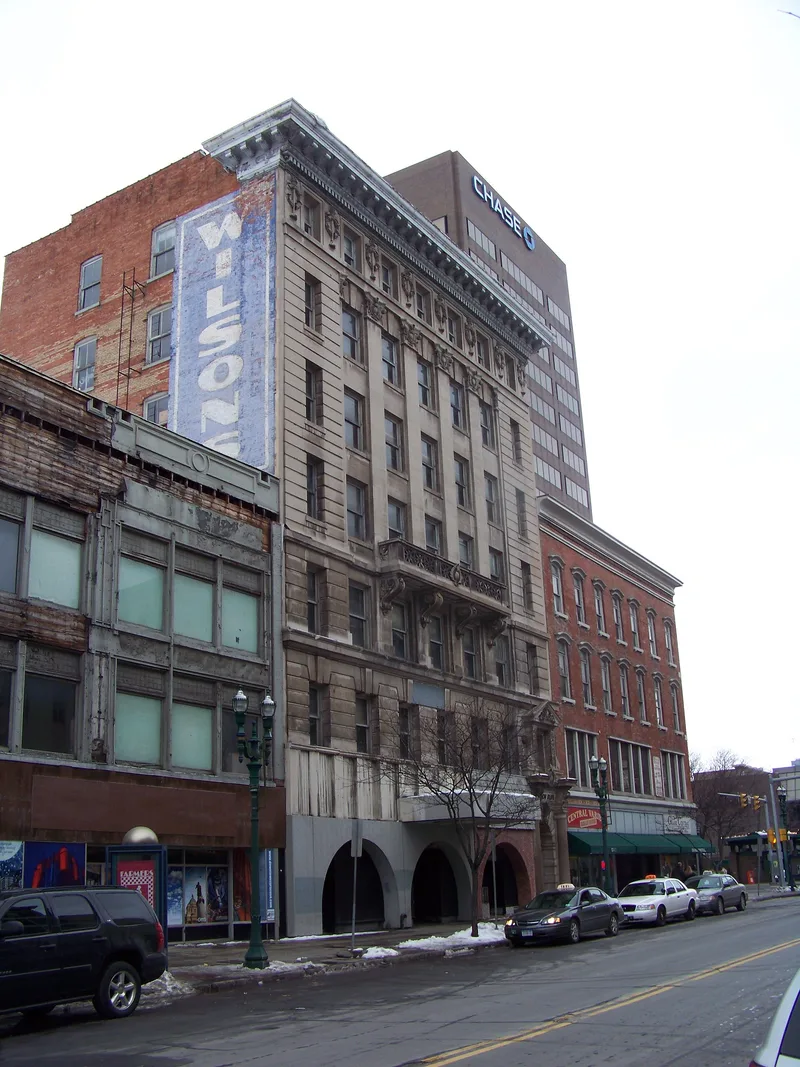
South Salina Street in downtown Syracuse holds a group of 25 commercial buildings in the 200, 300 and 400 blocks, built between 1855 and 1950. For nearly a century this was the shopping center of central New York. A major department store anchored each block: McCarthy & Sons, designed by Charles E. Colton in 1894; the L.A. Witherill Company in the 1855 Pike Block; and Dey Brothers, designed by Archimedes Russell in 1893. The Dey Brothers move into a former residential block south of Fayette Street surprised local merchants, but it pulled the business district southward. Styles range from Italianate and High Victorian Gothic to Beaux Arts, Italian Renaissance Revival, Art Deco and Modern. The district also includes Loew's State Theater, which was individually listed in 1977. Although later alterations hid some facades and shopping has moved to highway centers, the street preserves the architecture of the department store era and the growth of Syracuse's commercial core.
Machine-generated summary. This summary was generated by a language model from the official nomination document and has not been reviewed line by line by an editor. It may contain errors. Check the source document before relying on any detail. Source: nomination document (PDF) · catalog entry. Generated October 2026 (model claude-sonnet-5-5, prompt v1.0-2026-10-29).
| Styles | Late Victorian: Italianate, Renaissance; Late 19th and Early 20th Century Revivals: Beaux Arts |
|---|---|
| Areas of significance | Architecture, Commerce, Community Planning and Development, Entertainment/Recreation |
| Acreage | 9.3 |
| Boundary source | not published |
| Full listing page | South Salina Street Downtown Historic District (property record) |
What listing means for this property
This is a historic district. Buildings within its boundary are either contributing (they add to the district's significance) or non-contributing. Owners of contributing income-producing buildings can claim the 20% federal rehabilitation tax credit; homeowners should look at state credits. National Register districts impose no design review by themselves; a local historic district ordinance, if one exists, does (the difference explained).
General information, not legal or tax advice. Rules change; confirm with your State Historic Preservation Office or a qualified adviser.