South Otselic Historic District

Why it's listed
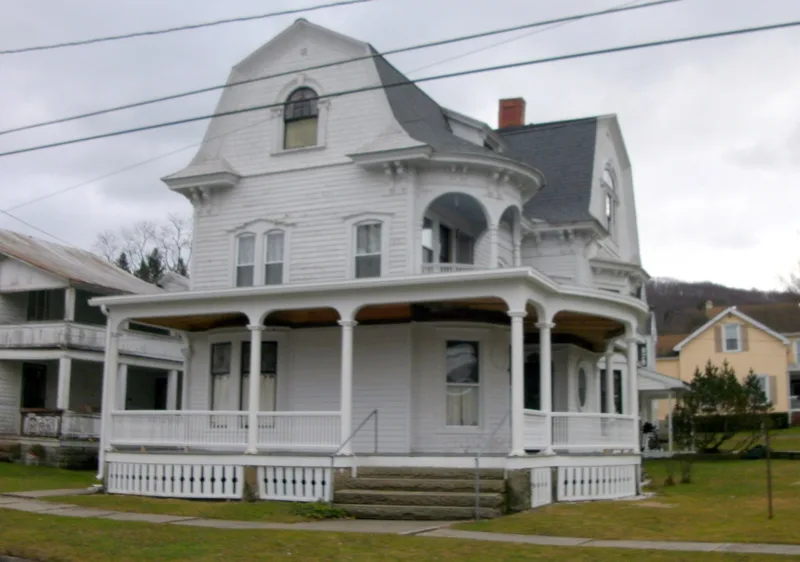
South Otselic is a rural hamlet in the Otselic River Valley of northwestern Chenango County, New York, and its historic district takes in sixty buildings that include homes, shops, factories and churches. The oldest structures include a grist mill possibly from the early 1810s, a harness shop from the 1840s, and plain Greek Revival houses and churches. Later buildings show Italianate and Victorian eclectic styles, including the three-story Cox Block of 1890, the 1878 Perkins Block and the 1896 Dew Drop Building. The hamlet grew as the trading and social center for farms in a remote area, with mills, tanneries and a plank road to Norwich. Its late nineteenth-century building boom followed the Gladding Line Company's move to a new three-story factory in 1895. That company, founded in 1816, still operates in the hamlet and has helped it survive as population fell in the twentieth century. The district was listed for this intact collection of vernacular homes, commercial blocks and mansions.
Machine-generated summary. This summary was generated by a language model from the official nomination document and has not been reviewed line by line by an editor. It may contain errors. Check the source document before relying on any detail. Source: nomination document (PDF) · catalog entry. Generated October 2026 (model claude-sonnet-5-5, prompt v1.0-2026-10-29).
| Period of significance | 1800-1910 |
|---|---|
| Styles | Greek Revival, Italianate, Victorian eclectic, Queen Anne, Colonial Revival, vernacular |
| Areas of significance | Industry, Exploration/Settlement, Architecture |
| Acreage | 33 |
| Boundary source | NPS cultural-resource GIS polygon |
| Full listing page | South Otselic Historic District (property record) |
What listing means for this property
This is a historic district. Buildings within its boundary are either contributing (they add to the district's significance) or non-contributing. Owners of contributing income-producing buildings can claim the 20% federal rehabilitation tax credit; homeowners should look at state credits. National Register districts impose no design review by themselves; a local historic district ordinance, if one exists, does (the difference explained).
General information, not legal or tax advice. Rules change; confirm with your State Historic Preservation Office or a qualified adviser.