Snyder Estate Natural Cement Historic District

Why it's listed
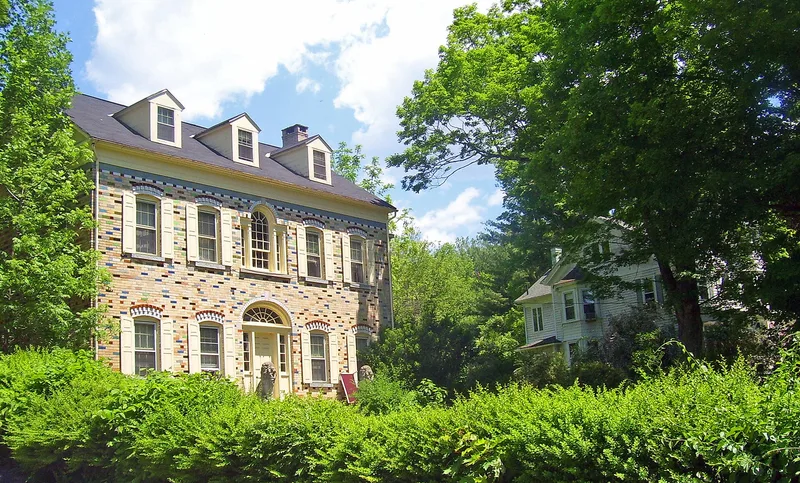
Near Rosendale in Ulster County, New York, this 275-acre district joins a family estate with the remains of four major natural cement operations: the Lawrence, Beach, Snyder and Century works. The estate includes the 1809 Jacob Lowe Snyder house, later called Century House, altered around 1940 by Kingston architect Edward Milliken, along with several later residences, barns and a Brooklyn Bridge-themed entry gate. The industrial side includes eight stone draw kilns dating to about 1830, mines, a tenement house and numerous ruins and archeological sites. Watson E. Lawrence developed continuous draw kilns here and supplied cement for projects such as the Croton Aqueduct and the Brooklyn Navy Yard dry dock. The Delaware and Hudson Canal supplied coal and carried the product to New York City. The nomination presents the district as the largest and most important source of natural cement in New York State in the nineteenth century, with cement production continuing until 1970.
Machine-generated summary. This summary was generated by a language model from the official nomination document and has not been reviewed line by line by an editor. It may contain errors. Check the source document before relying on any detail. Source: nomination document (PDF) · catalog entry. Generated October 2026 (model claude-sonnet-5-5, prompt v1.0-2026-10-29).
| Styles | No style; Federal |
|---|---|
| Areas of significance | Industry, Architecture |
| Acreage | 275 |
| Boundary source | NPS cultural-resource GIS polygon |
| Full listing page | Snyder Estate Natural Cement Historic District (property record) |
What listing means for this property
This is a historic district. Buildings within its boundary are either contributing (they add to the district's significance) or non-contributing. Owners of contributing income-producing buildings can claim the 20% federal rehabilitation tax credit; homeowners should look at state credits. National Register districts impose no design review by themselves; a local historic district ordinance, if one exists, does (the difference explained).
General information, not legal or tax advice. Rules change; confirm with your State Historic Preservation Office or a qualified adviser.