Smith's, Paul, Electric Light and Power and Railroad Company Complex

The National Park Service has not published a boundary polygon for this district; the map shows the listed properties inside it and the district's reference point.
Why it's listed
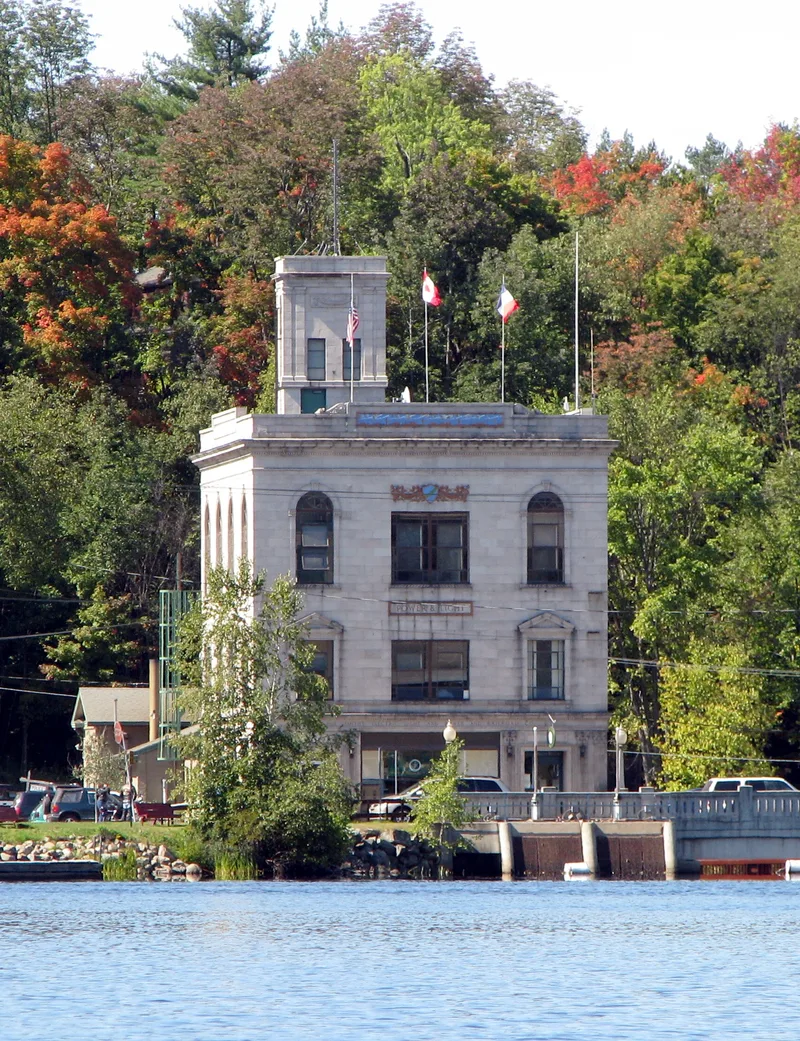
Beside the outlet of Lake Flower in Saranac Lake, a group of four linked elements records the village's electrical history: a brick powerhouse, a terra-cotta office building, a concrete bridge and a dam with its flume. The site had held a dam and sawmill since 1827 and later supplied power to a small electric company. Paul Smith bought that company in 1907, and a new brick powerhouse replaced the old mill in 1908. Smith's son Phelps added the three-story Neoclassical office building in 1927. It has pale gray terra-cotta cladding, fluted pilasters with Corinthian capitals, colored ceramic tile and a glazed frieze showing a city with power lines. The bridge was designed to complement it, and a Works Progress Administration dam followed in the late 1930s. Generating equipment was scrapped during World War II. The village acquired the buildings in 1986 and now uses the office building for municipal offices. The complex was listed for its utility history and architecture.
Machine-generated summary. This summary was generated by a language model from the official nomination document and has not been reviewed line by line by an editor. It may contain errors. Check the source document before relying on any detail. Source: nomination document (PDF) · catalog entry. Generated October 2026 (model claude-sonnet-5-5, prompt v1.0-2026-10-29).
| Period of significance | 1908-c. 1937 |
|---|---|
| Styles | Neoclassical |
| Areas of significance | Industry, Architecture |
| Acreage | 2 |
| Boundary source | not published |
| Full listing page | Smith's, Paul, Electric Light and Power and Railroad Company Complex (property record) |
What listing means for this property
This is a historic district. Buildings within its boundary are either contributing (they add to the district's significance) or non-contributing. Owners of contributing income-producing buildings can claim the 20% federal rehabilitation tax credit; homeowners should look at state credits. National Register districts impose no design review by themselves; a local historic district ordinance, if one exists, does (the difference explained).
General information, not legal or tax advice. Rules change; confirm with your State Historic Preservation Office or a qualified adviser.