Smith, Gerrit, Estate

Why it's listed
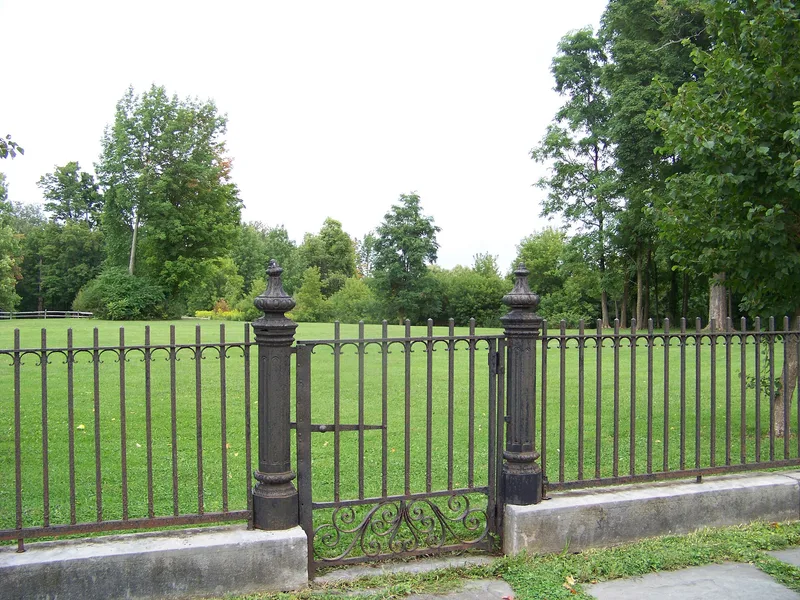
Set in the quiet hamlet of Peterboro, this 7.78-acre estate was the home base of Gerrit Smith, a nineteenth-century reformer and abolitionist. Once a village-like complex of about thirty buildings, it now retains a brick Land Office and smokehouse built in 1804, a mid-century timber-framed barn, a laundry building, and the site of the mansion, which burned in 1936. The Land Office held records of the Smith family's extensive land holdings in New York and other states. Accounts say the barn sheltered people escaping slavery, and the laundry reflects the work of Harriet Russell, who was freed by Gerrit and Ann Smith in 1841. Ruins, garden walls, an iron fence, a limestone dam and wooded and open grounds add archaeological and landscape interest. A nearby house called the lodge is altered and does not contribute. The surrounding hamlet has changed little since the mid-nineteenth century, which preserves the estate's setting. The period of significance runs from 1819 to 1874.
Machine-generated summary. This summary was generated by a language model from the official nomination document and has not been reviewed line by line by an editor. It may contain errors. Check the source document before relying on any detail. Source: nomination document (PDF) · catalog entry. Generated October 2026 (model claude-sonnet-5-5, prompt v1.0-2026-10-29).
| Period of significance | 1819-1874 |
|---|---|
| Styles | Early Republic/Federal; Mid-19th Century/Other: Board and Batten, Rustic/Chalet |
| Areas of significance | Black, Social History |
| Acreage | 7.8 |
| Boundary source | NPS cultural-resource GIS polygon |
| Full listing page | Smith, Gerrit, Estate (property record) |
What listing means for this property
This is a historic district. Buildings within its boundary are either contributing (they add to the district's significance) or non-contributing. Owners of contributing income-producing buildings can claim the 20% federal rehabilitation tax credit; homeowners should look at state credits. National Register districts impose no design review by themselves; a local historic district ordinance, if one exists, does (the difference explained).
General information, not legal or tax advice. Rules change; confirm with your State Historic Preservation Office or a qualified adviser.