Slingerlands Historic District (Additional Documentation)

Why it's listed
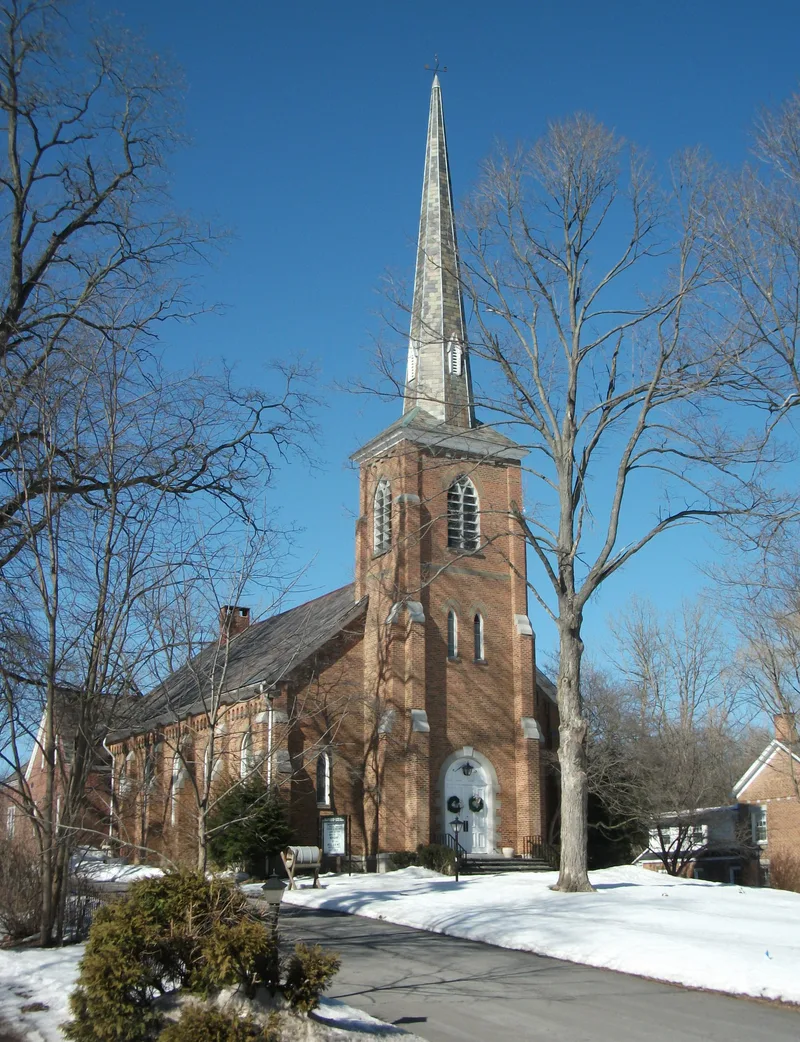
Slingerlands is a linear hamlet strung along about a mile of New Scotland Road in the Town of Bethlehem, Albany County, with short stretches of Bridge Street and Mullens Road. Its 102 contributing buildings include large houses on generous lots, a Gothic Revival Methodist church built in 1871, a converted school, and a former industrial building turned residential. The oldest building began around 1790, and several Greek Revival farmhouses date from the early settlement period. Development accelerated after the Albany and Susquehanna Railroad, routed through Slingerland family lands, was completed here by 1869. Victorian villas followed from the 1870s, many with three-sided bay windows under prominent gables, colorful slate roofs and towers in Italianate, Queen Anne and Stick styles. A later phase brought bungalows, Colonial Revival houses, and Cape Cods, often built on subdivided lots. The Tollgate Ice Cream building of 1949 is closely tied to the hamlet's identity.
Machine-generated summary. This summary was generated by a language model from the official nomination document and has not been reviewed line by line by an editor. It may contain errors. Check the source document before relying on any detail. Source: nomination document (PDF) · catalog entry. Generated October 2026 (model claude-sonnet-5-5, prompt v1.0-2026-10-29).
| Styles | Italianate; Commercial Style; Colonial Revival; Federal; Greek Revival; Queen Anne; Stick; Bungalow |
|---|---|
| Areas of significance | Architecture, Community Planning and Development |
| Acreage | 98 |
| Boundary source | NPS cultural-resource GIS polygon |
| Full listing page | Slingerlands Historic District (Additional Documentation) (property record) |
What listing means for this property
This is a historic district. Buildings within its boundary are either contributing (they add to the district's significance) or non-contributing. Owners of contributing income-producing buildings can claim the 20% federal rehabilitation tax credit; homeowners should look at state credits. National Register districts impose no design review by themselves; a local historic district ordinance, if one exists, does (the difference explained).
General information, not legal or tax advice. Rules change; confirm with your State Historic Preservation Office or a qualified adviser.