Sharon Springs Historic District

Why it's listed
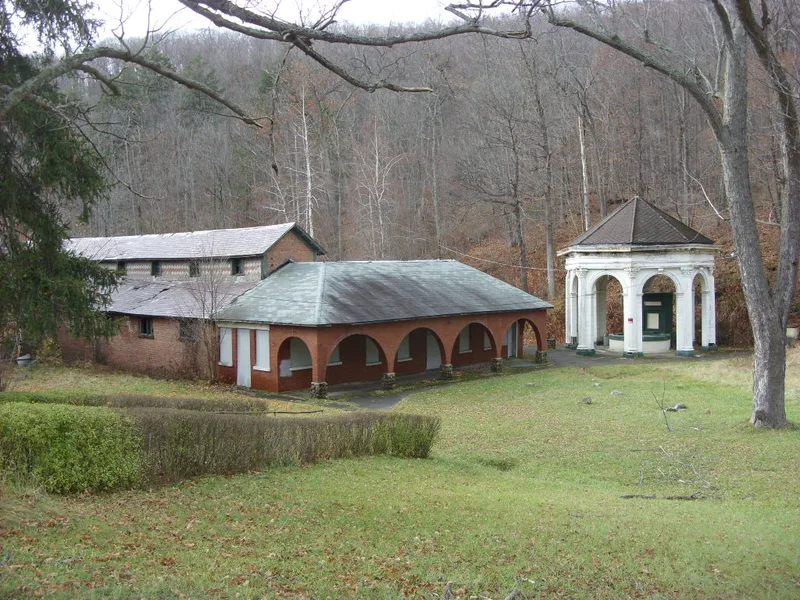
Sharon Springs Historic District occupies the northeast portion of a rural village in Schoharie County, New York, where faults in a limestone bed yielded the mineral springs that gave the community its name. The district preserves the surviving core of a spa resort active from about 1825 to 1941. Its centerpiece is a group of four spring houses and four bathhouses, including the cast iron Magnesia Temple of 1863 and the nineteenth-century Lower and Inhalation Bath Houses. Around them stand large frame hotels such as the 1928 Mission style Adler and the Greek Revival American Hotel, along with about twenty boardinghouses, commercial blocks, churches, a 1904 synagogue and family estates. Roughly half the buildings are private residences, many of which once took in paying guests. Because automobile-era growth followed Route 20 instead, the spa area was left largely intact. The district is significant locally for this concentration of resort architecture.
Machine-generated summary. This summary was generated by a language model from the official nomination document and has not been reviewed line by line by an editor. It may contain errors. Check the source document before relying on any detail. Source: nomination document (PDF) · catalog entry. Generated October 2026 (model claude-sonnet-5-5, prompt v1.0-2026-10-29).
| Period of significance | ca. 1825-1941 |
|---|---|
| Styles | Greek Revival, Italianate, Queen Anne, Beaux Arts, Colonial Revival, Mission |
| Areas of significance | Health/Medicine, Architecture, Entertainment/Recreation |
| Acreage | 374 |
| Boundary source | NPS cultural-resource GIS polygon |
| Full listing page | Sharon Springs Historic District (property record) |
What listing means for this property
This is a historic district. Buildings within its boundary are either contributing (they add to the district's significance) or non-contributing. Owners of contributing income-producing buildings can claim the 20% federal rehabilitation tax credit; homeowners should look at state credits. National Register districts impose no design review by themselves; a local historic district ordinance, if one exists, does (the difference explained).
General information, not legal or tax advice. Rules change; confirm with your State Historic Preservation Office or a qualified adviser.