Saratoga Spa State Park District

Why it's listed
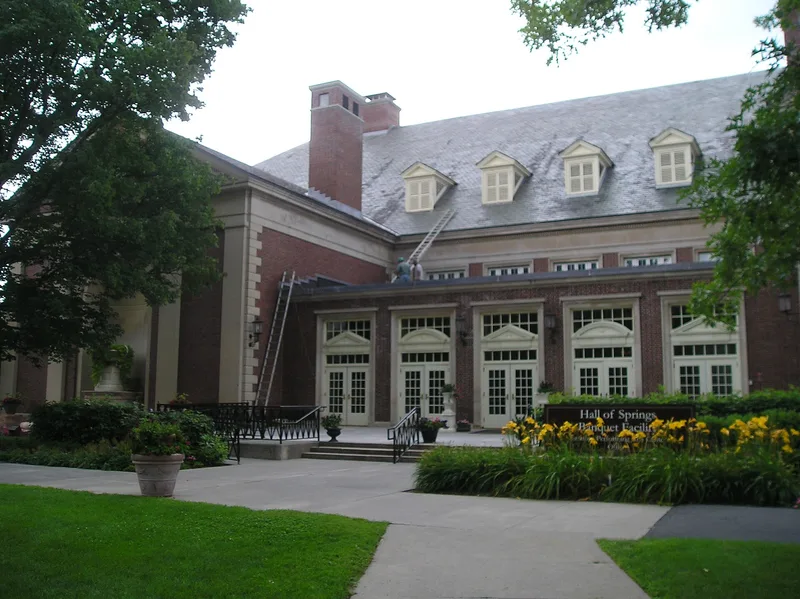
Saratoga Spa State Park occupies the foothills of the Adirondacks south of downtown Saratoga Springs, New York. The nominated district covers 970 acres of the state-owned land as it stood in 1934 and holds 44 contributing features. They include bathhouses, pump houses, mineral water fountains, geysers, picnic shelters and planted landscapes. Its three main areas are Lincoln Park, Geyser Creek and the central Spa Complex. Lincoln Park has the half-timbered Washington Bathhouse and the Neoclassical Lincoln Baths. Geyser Creek has rustic stone fountains and ravine trails. The Spa Complex follows a formal cruciform plan by landscape architect A.H. Brinckerhoff, with red brick Georgian Revival buildings such as the Hall of Springs and the Gideon Putnam Hotel. Most features date from about 1910 to 1935. The ca. 1835 Patrick-Latour farmhouse is the only older building. Later additions, including the 1966 performing arts amphitheatre, are described as sensitively placed, and the park retains strong integrity.
Machine-generated summary. This summary was generated by a language model from the official nomination document and has not been reviewed line by line by an editor. It may contain errors. Check the source document before relying on any detail. Source: nomination document (PDF) · catalog entry. Generated October 2026 (model claude-sonnet-5-5, prompt v1.0-2026-10-29).
| Styles | Georgian Revival, Beaux Arts Neoclassicism, Arts and Crafts, vernacular Greek Revival |
|---|---|
| Areas of significance | Landscape Architecture, Conservation, Health/Medicine, Architecture |
| Acreage | 950 |
| Boundary source | NPS cultural-resource GIS polygon |
| Full listing page | Saratoga Spa State Park District (property record) |
What listing means for this property
This is a historic district. Buildings within its boundary are either contributing (they add to the district's significance) or non-contributing. Owners of contributing income-producing buildings can claim the 20% federal rehabilitation tax credit; homeowners should look at state credits. National Register districts impose no design review by themselves; a local historic district ordinance, if one exists, does (the difference explained).
General information, not legal or tax advice. Rules change; confirm with your State Historic Preservation Office or a qualified adviser.