Salem Historic District

Why it's listed
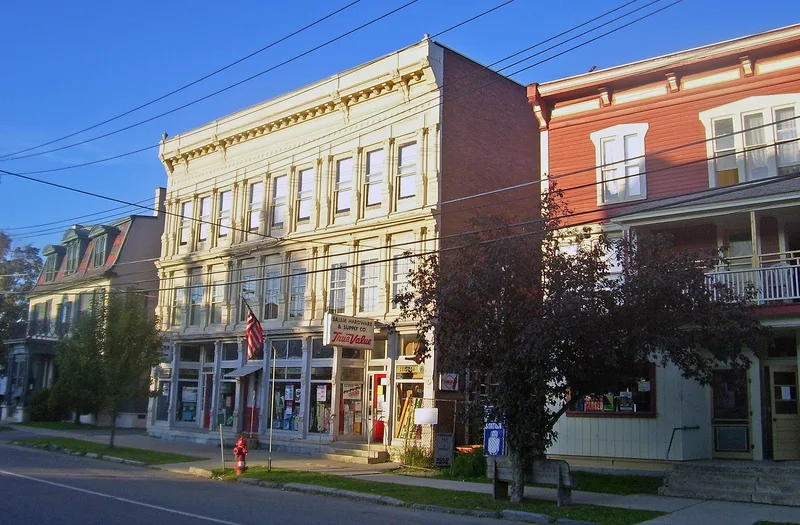
Salem's historic district occupies the center of a village in central Washington County, New York, near the Vermont line. Shaped like a cross, it follows Main Street and Broadway and takes in 79 residences, shops and churches, about ten of them from the twentieth century and most of the rest from the later 1800s. Main Street is the commercial spine, rebuilt in frame after a fire in 1840, with one- to three-story buildings that sit together harmoniously. Architectural examples include a Georgian frame house of 1790, a brick Federal house with an elliptical fanlight, and Greek Revival buildings with full-height columns, such as the First Presbyterian Church. The district matters for its age as well. Settlers from Massachusetts and Irish immigrants seeking religious freedom arrived in the 1760s, and Salem is probably the oldest continuously existing settlement in the county. The academy, Proudfit Hall and the county courthouse reflect its former economic and civic weight.
Machine-generated summary. This summary was generated by a language model from the official nomination document and has not been reviewed line by line by an editor. It may contain errors. Check the source document before relying on any detail. Source: nomination document (PDF) · catalog entry. Generated October 2026 (model claude-sonnet-5-5, prompt v1.0-2026-10-29).
| Period of significance | 1800-1899 |
|---|---|
| Styles | Georgian, Federal, Greek Revival and later nineteenth century |
| Areas of significance | Commerce, Exploration/Settlement, Architecture |
| Acreage | 22 |
| Boundary source | NPS cultural-resource GIS polygon |
| Full listing page | Salem Historic District (property record) |
What listing means for this property
This is a historic district. Buildings within its boundary are either contributing (they add to the district's significance) or non-contributing. Owners of contributing income-producing buildings can claim the 20% federal rehabilitation tax credit; homeowners should look at state credits. National Register districts impose no design review by themselves; a local historic district ordinance, if one exists, does (the difference explained).
General information, not legal or tax advice. Rules change; confirm with your State Historic Preservation Office or a qualified adviser.