Saint James District

Why it's listed
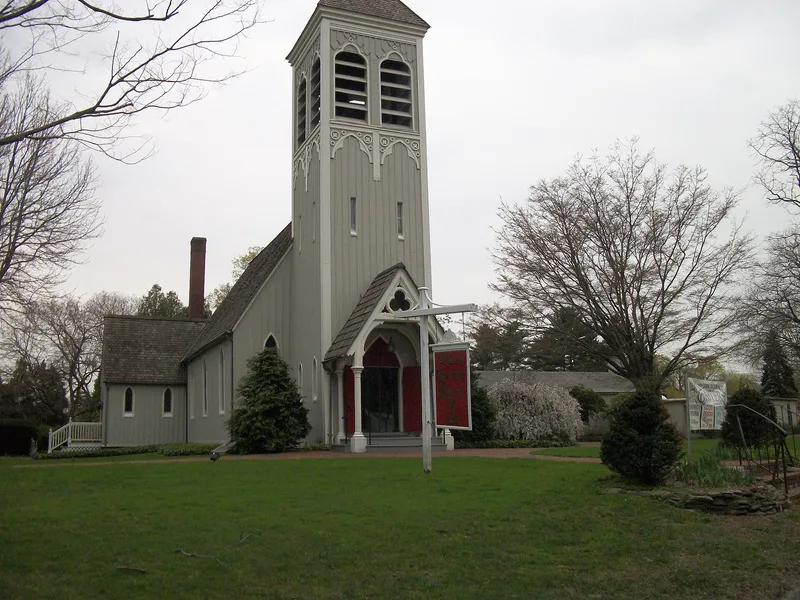
Along a winding, tree-lined stretch of North Country Road (N.Y. Route 25A) in St. James, a district of about 90 acres preserves the look of a 19th-century Long Island farming community. Roughly 27 structures lie within it, most of them frame buildings. Three anchor the district: the Timothy Smith House, built about 1800 and later moved back and enlarged by Lawrence S. Butler; "Deepwells," a Greek Revival house built in 1845-1847 by George Curtis for Joel L. G. Smith; and the board-and-batten St. James Episcopal Church of 1853, with Tiffany stained glass. Other buildings include the 1873 railroad station, a general store now used as a museum, and a remodeled mid-19th-century hotel. The district was listed because it shows how a farming settlement gave way to an area of estates in the late 19th century, while keeping its rural character through local interest and zoning.
Machine-generated summary. This summary was generated by a language model from the official nomination document and has not been reviewed line by line by an editor. It may contain errors. Check the source document before relying on any detail. Source: nomination document (PDF) · catalog entry. Generated October 2026 (model claude-sonnet-5-5, prompt v1.0-2026-10-29).
| Styles | Greek Revival ("Deepwells"); board-and-batten Gothic-influenced church; varied 19th-century rural Long Island styles |
|---|---|
| Areas of significance | Architecture |
| Acreage | 90 |
| Boundary source | NPS cultural-resource GIS polygon |
| Full listing page | Saint James District (property record) |
What listing means for this property
This is a historic district. Buildings within its boundary are either contributing (they add to the district's significance) or non-contributing. Owners of contributing income-producing buildings can claim the 20% federal rehabilitation tax credit; homeowners should look at state credits. National Register districts impose no design review by themselves; a local historic district ordinance, if one exists, does (the difference explained).
General information, not legal or tax advice. Rules change; confirm with your State Historic Preservation Office or a qualified adviser.