Roycroft Campus

Why it's listed
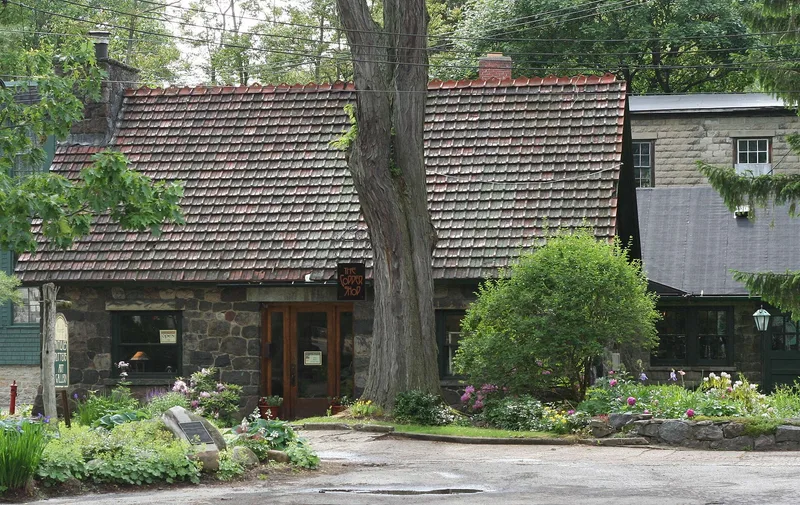
Two ivy-clad crenellated towers mark the entrance to the Roycroft campus in East Aurora, a cluster of about nine stone, shingled and half-timbered buildings around Main and South Grove Streets. Elbert Hubbard founded the community after a visit to England in 1894, inspired by William Morris and the ideas of John Ruskin. Funds from his essay "The Message to Garcia" paid for expansion. Between 1899 and 1905 Roycroft craftsmen built the stone Chapel, the Print Shop, the Copper Shop and the Bindery, and later the Power House, Laundry and an enlarged inn. Medieval-style gables, dormers and towers link the buildings. The campus housed printing, furniture, metalwork and bookbinding, along with public talks and concerts. The Roycroft enterprise continued until 1938, and Hubbard died in 1915 aboard the Lusitania. Today the buildings serve new uses, and the campus is recognized as the most stable and significant community of the American arts and crafts movement.
Machine-generated summary. This summary was generated by a language model from the official nomination document and has not been reviewed line by line by an editor. It may contain errors. Check the source document before relying on any detail. Source: nomination document (PDF) · catalog entry. Generated October 2026 (model claude-sonnet-5-5, prompt v1.0-2026-10-29).
| Styles | Medieval-inspired arts and crafts: half-timbered, shingled and stone buildings with crenellated towers |
|---|---|
| Areas of significance | Commerce, Art, Literature, Architecture, Religion, Social History |
| Acreage | 10 |
| Boundary source | NPS cultural-resource GIS polygon |
| Full listing page | Roycroft Campus (property record) |
What listing means for this property
This is a historic district. Buildings within its boundary are either contributing (they add to the district's significance) or non-contributing. Owners of contributing income-producing buildings can claim the 20% federal rehabilitation tax credit; homeowners should look at state credits. National Register districts impose no design review by themselves; a local historic district ordinance, if one exists, does (the difference explained).
General information, not legal or tax advice. Rules change; confirm with your State Historic Preservation Office or a qualified adviser.