Rockwood Chocolate Factory Historic District

The National Park Service has not published a boundary polygon for this district; the map shows the listed properties inside it and the district's reference point.
Why it's listed
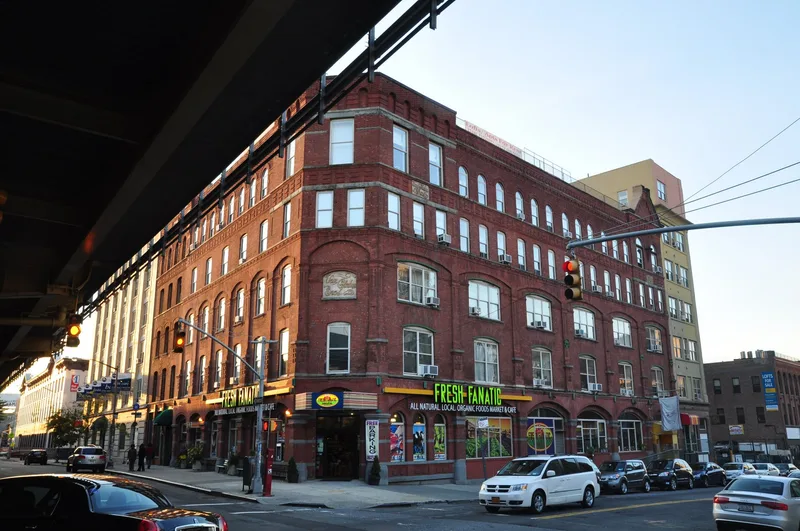
Seventeen brick factory buildings fill a block in Brooklyn's Wallabout neighborhood, just outside the Navy Yard gates. They formed the plant of Rockwood & Company, a cocoa and chocolate maker founded in Manhattan in 1886 that moved to this site in 1904. The oldest building dates from 1891; later ones were added through 1928, with Building 4 begun in 1910. Most show Romanesque Revival or Second Renaissance Revival influence, tied together by decorative brickwork, string courses and arched openings. Architects included J.G. Glover, the Parfitt Brothers and Ernest Flagg. At its peak the company ranked second in the United States behind Hershey and made chocolate bars for soldiers' rations in World War II. Sold in 1954, it shut down in 1957, reopened under new ownership, and closed in 1967. Some buildings stand vacant, while others are occupied. The group is valued as a surviving link to the area's food-industry past.
Machine-generated summary. This summary was generated by a language model from the official nomination document and has not been reviewed line by line by an editor. It may contain errors. Check the source document before relying on any detail. Source: nomination document (PDF) · catalog entry. Generated October 2026 (model claude-sonnet-5-5, prompt v1.0-2026-10-29).
| Period of significance | 1891-1928 |
|---|---|
| Styles | Romanesque Revival and Second Renaissance Revival |
| Areas of significance | Architecture |
| Acreage | 1.8 |
| Boundary source | not published |
| Full listing page | Rockwood Chocolate Factory Historic District (property record) |
What listing means for this property
This is a historic district. Buildings within its boundary are either contributing (they add to the district's significance) or non-contributing. Owners of contributing income-producing buildings can claim the 20% federal rehabilitation tax credit; homeowners should look at state credits. National Register districts impose no design review by themselves; a local historic district ordinance, if one exists, does (the difference explained).
General information, not legal or tax advice. Rules change; confirm with your State Historic Preservation Office or a qualified adviser.