Rockefeller, John D., Estate

Why it's listed
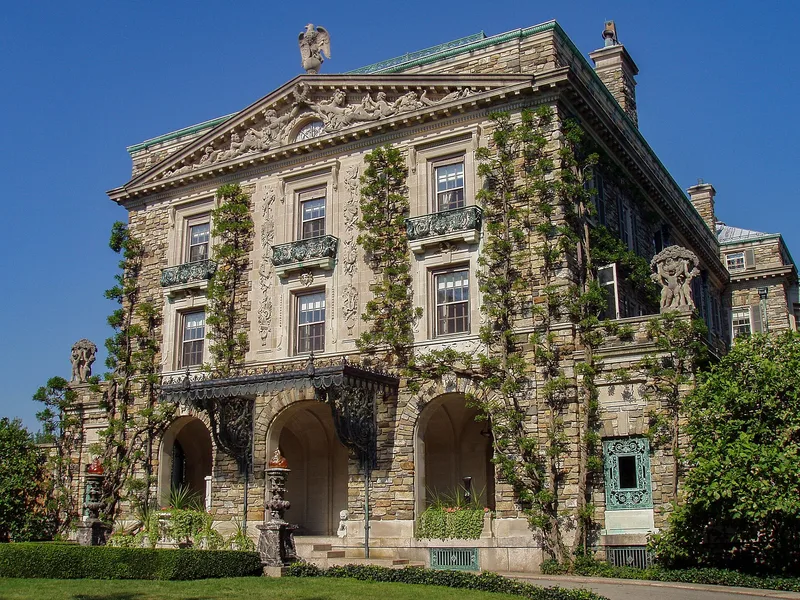
Pocantico Hills, north of Tarrytown in Westchester County, was the country retreat of oil magnate John D. Rockefeller Sr., who bought his first property there in 1893 and later expanded the estate to about 4,000 acres. Its heart is the Park, where the hilltop mansion Kykuit looks out over the Hudson and the Tappan Zee. After the first house burned in 1902, the firm of Delano and Aldrich designed a Neo-Georgian stone mansion, built 1907-1909 and enlarged in 1911-1913. William Welles Bosworth designed the formal gardens, the orangerie, the carriage house and garage, and an administration complex. A Japanese garden, a Tudor-style Playhouse and other buildings were added. The family wanted simplicity rather than display, yet the estate came to symbolize great wealth. It is recognized for its association with Rockefeller and as a surviving record of the early twentieth-century country estate.
Machine-generated summary. This summary was generated by a language model from the official nomination document and has not been reviewed line by line by an editor. It may contain errors. Check the source document before relying on any detail. Source: nomination document (PDF) · catalog entry. Generated October 2026 (model claude-sonnet-5-5, prompt v1.0-2026-10-29).
| Period of significance | 1893-1937 |
|---|---|
| Styles | Neo-Georgian (Kykuit mansion); Beaux-Arts-influenced formal gardens; Tudor (Playhouse) |
| Areas of significance | Industry, Social History |
| Acreage | 249 |
| Boundary source | NPS cultural-resource GIS polygon |
| Full listing page | Rockefeller, John D., Estate (property record) |
What listing means for this property
This is a historic district. Buildings within its boundary are either contributing (they add to the district's significance) or non-contributing. Owners of contributing income-producing buildings can claim the 20% federal rehabilitation tax credit; homeowners should look at state credits. National Register districts impose no design review by themselves; a local historic district ordinance, if one exists, does (the difference explained).
General information, not legal or tax advice. Rules change; confirm with your State Historic Preservation Office or a qualified adviser.