Rochester Street Historic District

Why it's listed
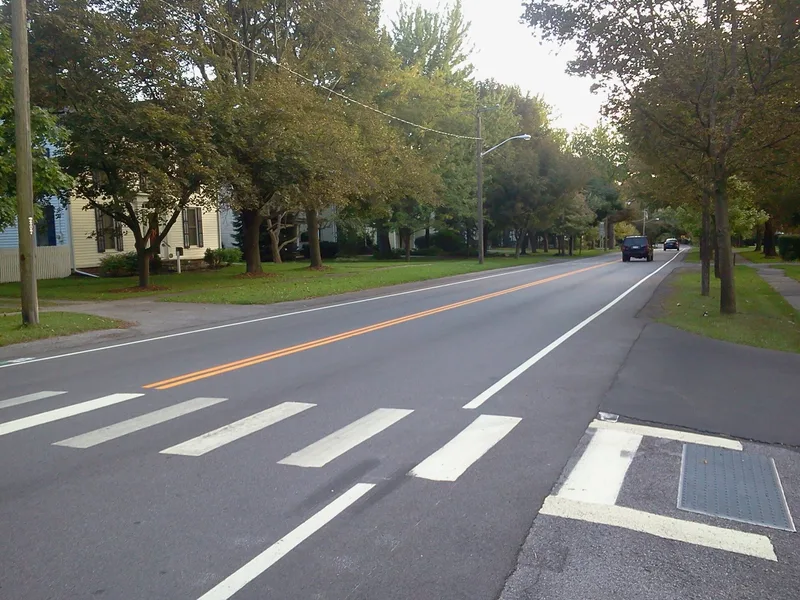
Rochester Street in Scottsville, Monroe County, New York, about 13 miles southwest of Rochester, is lined with 41 houses along a wide, tree-shaded roadway. More than half were built between the 1830s and 1850s, which gives the street an overall Greek Revival character. The oldest known building, at number 7, dates from 1816, while the newest, at number 17, was built in 1957, yet consistent scale and rhythm hold them together. Few houses stand out individually, but notable examples include a series of mid-century homes attributed to builder Sears Galusha and a 1917 shingle-style house. Local historian Carl Schmidt described the dwellings as modest homes of doctors, ministers, merchants and craftsmen with fine mouldings and good craftsmanship. Most of the houses date from a boom driven by wheat farming, a canal link opened in 1837 and a railroad in 1838. Later suburban growth in the village has barely altered the street's nineteenth-century appearance.
Machine-generated summary. This summary was generated by a language model from the official nomination document and has not been reviewed line by line by an editor. It may contain errors. Check the source document before relying on any detail. Source: nomination document (PDF) · catalog entry. Generated October 2026 (model claude-sonnet-5-5, prompt v1.0-2026-10-29).
| Styles | Greek Revival predominant; also Victorian and early twentieth-century shingle style |
|---|---|
| Areas of significance | Architecture |
| Acreage | 20 |
| Boundary source | NPS cultural-resource GIS polygon |
| Full listing page | Rochester Street Historic District (property record) |
What listing means for this property
This is a historic district. Buildings within its boundary are either contributing (they add to the district's significance) or non-contributing. Owners of contributing income-producing buildings can claim the 20% federal rehabilitation tax credit; homeowners should look at state credits. National Register districts impose no design review by themselves; a local historic district ordinance, if one exists, does (the difference explained).
General information, not legal or tax advice. Rules change; confirm with your State Historic Preservation Office or a qualified adviser.