Rensselaerville Historic District

Why it's listed
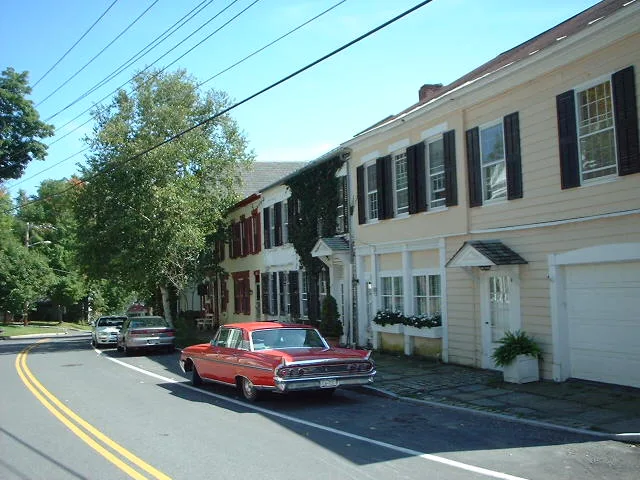
Rensselaerville is a hamlet tucked into the narrow, forested valley of Ten Mile Creek at the edge of the Helderberg Hills, about twenty-seven miles southwest of Albany. The historic district takes in roughly ninety buildings and outbuildings along Main Street and the roads that meet it. Most were built in the first half of the nineteenth century, and Greek Revival style dominates, with massive columns, pilasters, heavy cornices and recessed doorways, mixed with Federal and Georgian features such as Palladian windows. Some facades use flush siding to imitate stonework. Ephraim Russ, a resident architect-builder, designed all of the village churches and several of its best houses, including the Jenkins, Stevens and Rider houses. The hamlet once served farmers as a commercial center with a grist mill, creamery and shops. After a late nineteenth-century decline, many houses became summer residences. Only four intrusions detract from the district's character.
Machine-generated summary. This summary was generated by a language model from the official nomination document and has not been reviewed line by line by an editor. It may contain errors. Check the source document before relying on any detail. Source: nomination document (PDF) · catalog entry. Generated October 2026 (model claude-sonnet-5-5, prompt v1.0-2026-10-29).
| Styles | Greek Revival predominates, with Federal and Georgian transitional elements |
|---|---|
| Areas of significance | Industry, Exploration/Settlement, Architecture |
| Acreage | 109 |
| Boundary source | NPS cultural-resource GIS polygon |
| Full listing page | Rensselaerville Historic District (property record) |
What listing means for this property
This is a historic district. Buildings within its boundary are either contributing (they add to the district's significance) or non-contributing. Owners of contributing income-producing buildings can claim the 20% federal rehabilitation tax credit; homeowners should look at state credits. National Register districts impose no design review by themselves; a local historic district ordinance, if one exists, does (the difference explained).
General information, not legal or tax advice. Rules change; confirm with your State Historic Preservation Office or a qualified adviser.