Reed Street Historic District

Why it's listed
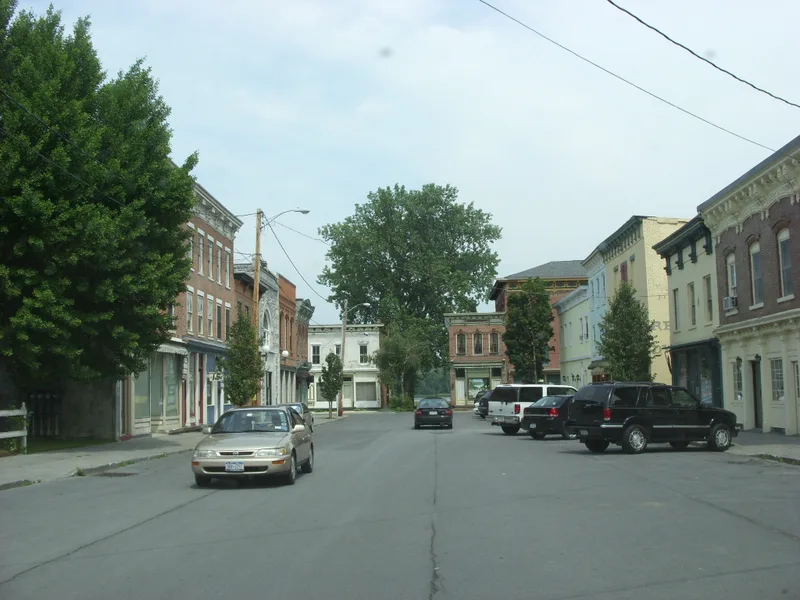
Reed Street in Coxsackie is a block of two- and three-story brick commercial buildings beside the Hudson River, once the site of a busy dock known as Reed's Landing. The district includes thirty-two buildings on Reed Street, one house on Ely Street, and parts of Mansion and River Streets. Most are Italianate storefronts with paired brackets, wide friezes, hood molds and, in some cases, cast-iron columns added late in the century. Three attached Federal residences, one now a library, and an early warehouse with iron loft doors represent the earlier period. Fires in the 1850s led to rebuilding on the north side of the street, which explains its uniform appearance. By 1867 the area was almost completely developed, and a fire house was added in 1872. Little has changed since the early 1880s. The district was listed for its historic role in river trade and for the architectural integrity of its commercial buildings.
Machine-generated summary. This summary was generated by a language model from the official nomination document and has not been reviewed line by line by an editor. It may contain errors. Check the source document before relying on any detail. Source: nomination document (PDF) · catalog entry. Generated October 2026 (model claude-sonnet-5-5, prompt v1.0-2026-10-29).
| Period of significance | 1800-1899 |
|---|---|
| Styles | Italianate (predominant), with Federal and Greek Revival buildings |
| Areas of significance | Commerce, Architecture |
| Acreage | 8 |
| Boundary source | NPS cultural-resource GIS polygon |
| Full listing page | Reed Street Historic District (property record) |
What listing means for this property
This is a historic district. Buildings within its boundary are either contributing (they add to the district's significance) or non-contributing. Owners of contributing income-producing buildings can claim the 20% federal rehabilitation tax credit; homeowners should look at state credits. National Register districts impose no design review by themselves; a local historic district ordinance, if one exists, does (the difference explained).
General information, not legal or tax advice. Rules change; confirm with your State Historic Preservation Office or a qualified adviser.