Red Mill Farm

Why it's listed
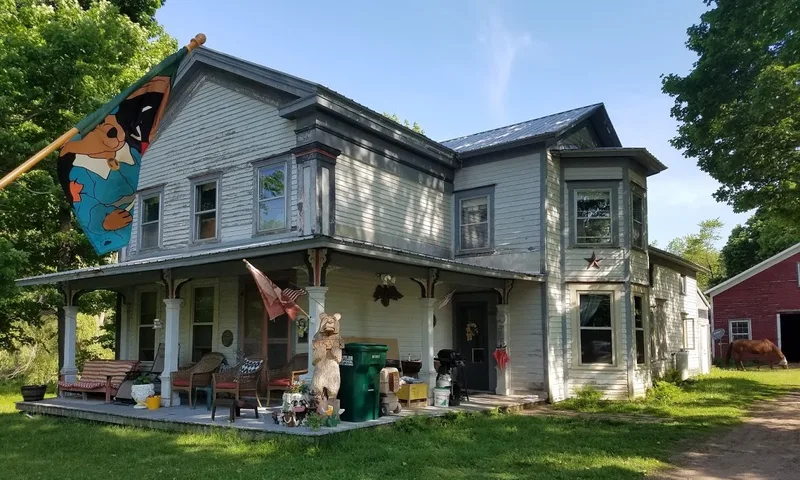
Red Mill Farm is a working farm complex about three-quarters of a mile east of Colosse, in Oswego County, New York. The nominated 174.76 acres hold six contributing buildings and three contributing structures. The two-story, three-bay farmhouse was built about 1832 by George Cholet, using hand-hewn hemlock timbers, a sandstone foundation and fashionable details such as paneled pilasters and a raking cornice. A tool shop, granary and horse barn date from the same period. Later additions include a windmill (1910), silo (1920), garage (1928) and milkhouse (1932). Together they show how the farm changed from grain production to dairying under the Moran family, who began renting the land in 1889. The farm kept about 175 acres of historic farmland and is regarded as one of the best preserved historic farm complexes in the county. A nearby nineteenth-century mill site was left out of the boundary because it has not been evaluated. Today the farm raises sheep.
Machine-generated summary. This summary was generated by a language model from the official nomination document and has not been reviewed line by line by an editor. It may contain errors. Check the source document before relying on any detail. Source: nomination document (PDF) · catalog entry. Generated October 2026 (model claude-sonnet-5-5, prompt v1.0-2026-10-29).
| Period of significance | c1832-1932 |
|---|---|
| Styles | Early Republic / Mid-19th Century; Italianate |
| Areas of significance | Agriculture, Architecture |
| Acreage | 174.8 |
| Boundary source | NPS cultural-resource GIS polygon |
| Full listing page | Red Mill Farm (property record) |
What listing means for this property
This is a historic district. Buildings within its boundary are either contributing (they add to the district's significance) or non-contributing. Owners of contributing income-producing buildings can claim the 20% federal rehabilitation tax credit; homeowners should look at state credits. National Register districts impose no design review by themselves; a local historic district ordinance, if one exists, does (the difference explained).
General information, not legal or tax advice. Rules change; confirm with your State Historic Preservation Office or a qualified adviser.