Randall Farm

Why it's listed
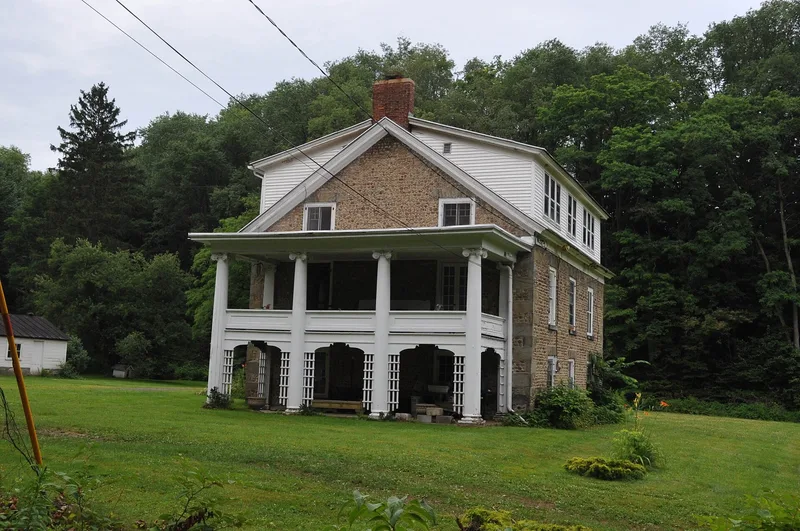
Just south of the city of Cortland, this twelve-acre farm on Page Green Road preserves a nineteenth-century farmstead built around a cobblestone house. The Federal style farmhouse, raised between 1825 and 1840, has walls of even courses of round gray cobbles with sandstone quoins, a center-hall plan and a raised basement that holds the original cooking fireplace and oven. A frame cottage from the 1850s or 1860s is attached to it. Around the houses stand a circa 1890 dairy barn moved to its present site in 1943, a milk house now used as a garage, a chicken house and a playhouse. The drive, stone-lined creek banks and an apple orchard remain as landscape features. The farm was first tied to William Randall, a banker who came to Cortland about 1812. Miles Peck added a Colonial Revival porch and dormers around 1920. The farmhouse is believed to be one of only three cobblestone buildings in Cortland County, which is the main reason for its listing.
Machine-generated summary. This summary was generated by a language model from the official nomination document and has not been reviewed line by line by an editor. It may contain errors. Check the source document before relying on any detail. Source: nomination document (PDF) · catalog entry. Generated October 2026 (model claude-sonnet-5-5, prompt v1.0-2026-10-29).
| Period of significance | ca. 1825-1950 |
|---|---|
| Styles | Early Republic / Federal |
| Areas of significance | Architecture |
| Acreage | 12.1 |
| Boundary source | NPS cultural-resource GIS polygon |
| Full listing page | Randall Farm (property record) |
What listing means for this property
This is a historic district. Buildings within its boundary are either contributing (they add to the district's significance) or non-contributing. Owners of contributing income-producing buildings can claim the 20% federal rehabilitation tax credit; homeowners should look at state credits. National Register districts impose no design review by themselves; a local historic district ordinance, if one exists, does (the difference explained).
General information, not legal or tax advice. Rules change; confirm with your State Historic Preservation Office or a qualified adviser.