Ramona Park Historic District

Why it's listed
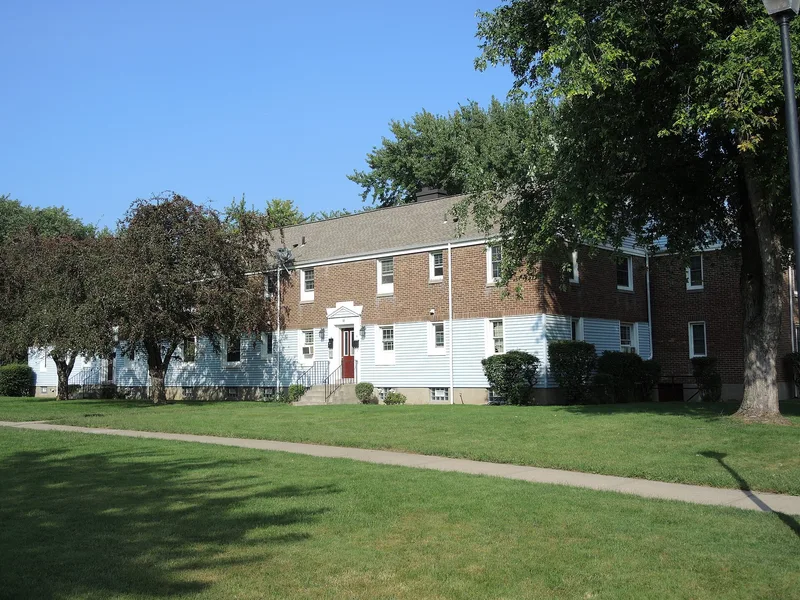
Ramona Park is a 10-acre veterans' housing complex in northwest Rochester, New York, built in 1948. It contains 34 two-story apartment buildings with four units each, 136 apartments in total, along with two groups of garages. The buildings are arranged in L-shaped and U-shaped clusters around a one-way drive, with sidewalks separate from vehicle traffic and about 70 percent of the land left as lawns, walks and play areas. Architect C. Storrs Barrows designed the vernacular Colonial Revival buildings, which are clad in brick, vinyl, or a combination of both. The complex was the second of three projects under the Rochester Plan, in which local home builders formed a non-profit corporation to build low-rent housing for veterans on land provided by the city, financed by an FHA-insured mortgage. It was placed near major employers such as Eastman Kodak. Its layout follows Garden City Movement principles and the federally promoted garden apartment model. A community center added in 2008 is the only non-contributing building.
Machine-generated summary. This summary was generated by a language model from the official nomination document and has not been reviewed line by line by an editor. It may contain errors. Check the source document before relying on any detail. Source: nomination document (PDF) · catalog entry. Generated October 2026 (model claude-sonnet-5-5, prompt v1.0-2026-10-29).
| Period of significance | 1948 |
|---|---|
| Styles | Colonial Revival |
| Areas of significance | Architecture, Community Planning and Development, Social History |
| Acreage | 10 |
| Boundary source | NPS cultural-resource GIS polygon |
| Full listing page | Ramona Park Historic District (property record) |
What listing means for this property
This is a historic district. Buildings within its boundary are either contributing (they add to the district's significance) or non-contributing. Owners of contributing income-producing buildings can claim the 20% federal rehabilitation tax credit; homeowners should look at state credits. National Register districts impose no design review by themselves; a local historic district ordinance, if one exists, does (the difference explained).
General information, not legal or tax advice. Rules change; confirm with your State Historic Preservation Office or a qualified adviser.