Quaker Street Historic District

Why it's listed
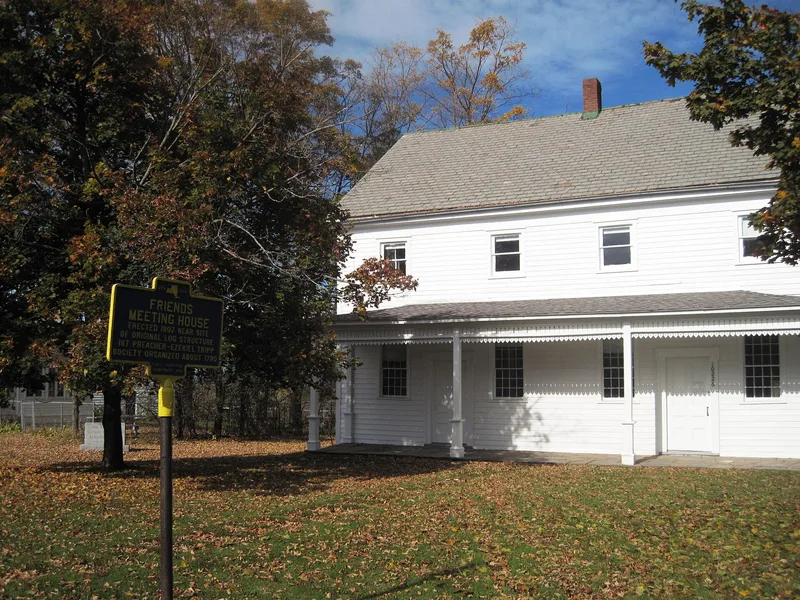
Quaker Street is a small hamlet in south-central Duanesburg, gathered around the meeting of three roads: Route 7, Route 395 and the Schoharie Turnpike. The historic district covers 43 properties with 63 contributing features, most of them one-and-a-half to two-story frame houses built between about 1807 and 1910. Federal and Greek Revival designs predominate, kept simple and symmetrical, while Gallupville Road holds a notable group of Italianate houses. Quaker families began arriving shortly before 1780 on land leased from James Duane and built a log meetinghouse around 1780. The present frame meetinghouse of 1807 uses hand-hewn timbers, hand-wrought hardware and stoves salvaged from the earlier building, reflecting the plain Quaker style. The hamlet grew with stores, a shoe-making business begun in 1845 and First Christ Church in 1859. It was listed for its intact architecture, its role as an early commercial and manufacturing center, and its Quaker heritage.
Machine-generated summary. This summary was generated by a language model from the official nomination document and has not been reviewed line by line by an editor. It may contain errors. Check the source document before relying on any detail. Source: nomination document (PDF) · catalog entry. Generated October 2026 (model claude-sonnet-5-5, prompt v1.0-2026-10-29).
| Styles | Vernacular Federal and Greek Revival, with Italianate, Queen Anne and Eastlake influences |
|---|---|
| Areas of significance | Architecture |
| Acreage | 37 |
| Boundary source | NPS cultural-resource GIS polygon |
| Full listing page | Quaker Street Historic District (property record) |
What listing means for this property
This is a historic district. Buildings within its boundary are either contributing (they add to the district's significance) or non-contributing. Owners of contributing income-producing buildings can claim the 20% federal rehabilitation tax credit; homeowners should look at state credits. National Register districts impose no design review by themselves; a local historic district ordinance, if one exists, does (the difference explained).
General information, not legal or tax advice. Rules change; confirm with your State Historic Preservation Office or a qualified adviser.