Pultneyville Historic District

Why it's listed
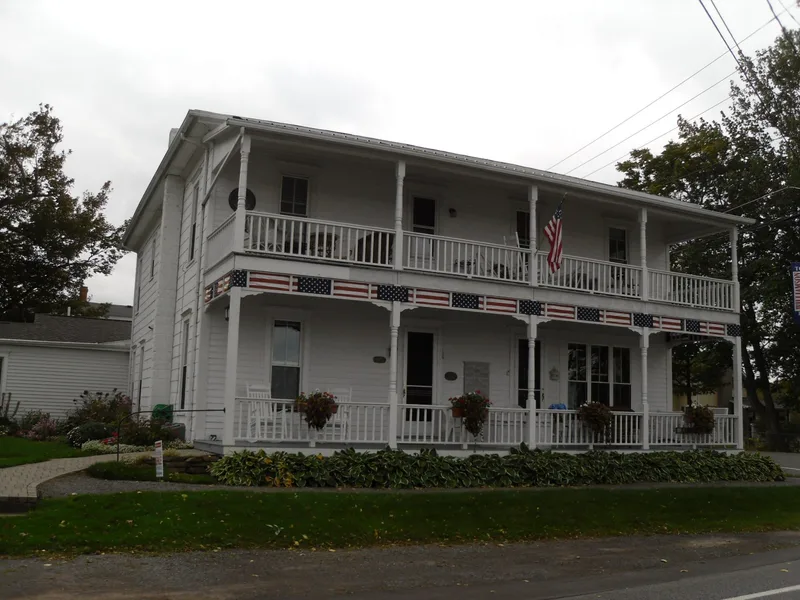
Pultneyville is a small hamlet on the south shore of Lake Ontario, surrounded by fruit and dairy farms. Its historic district takes in thirty-five properties along parts of Lake Road and Jay Street, including Mill and Washington Streets, across about thirty-seven acres. Most buildings are modest to fairly sophisticated Federal and Greek Revival frame houses from about 1810 to 1850, many on large landscaped lots with nineteenth-century outbuildings. Standouts include the cobblestone Horatio Nelson Throop House of about 1832, the Washington Throop House of about 1828, an Italianate brick house of about 1850, and a Second Empire brick mansion of the 1860s. Later structures include a former hotel from about 1887 and a former fire station from about 1890. The district was recognized because these buildings reflect the community's early prosperity as a Great Lakes shipping port and market for local farmers. The commercial and religious center west of the district lost its architectural integrity and was left out.
Machine-generated summary. This summary was generated by a language model from the official nomination document and has not been reviewed line by line by an editor. It may contain errors. Check the source document before relying on any detail. Source: nomination document (PDF) · catalog entry. Generated October 2026 (model claude-sonnet-5-5, prompt v1.0-2026-10-29).
| Styles | Federal and Greek Revival, with Italianate and Second Empire examples |
|---|---|
| Areas of significance | Architecture |
| Acreage | 37 |
| Boundary source | NPS cultural-resource GIS polygon |
| Full listing page | Pultneyville Historic District (property record) |
What listing means for this property
This is a historic district. Buildings within its boundary are either contributing (they add to the district's significance) or non-contributing. Owners of contributing income-producing buildings can claim the 20% federal rehabilitation tax credit; homeowners should look at state credits. National Register districts impose no design review by themselves; a local historic district ordinance, if one exists, does (the difference explained).
General information, not legal or tax advice. Rules change; confirm with your State Historic Preservation Office or a qualified adviser.