Prospect Park South Historic District

Why it's listed
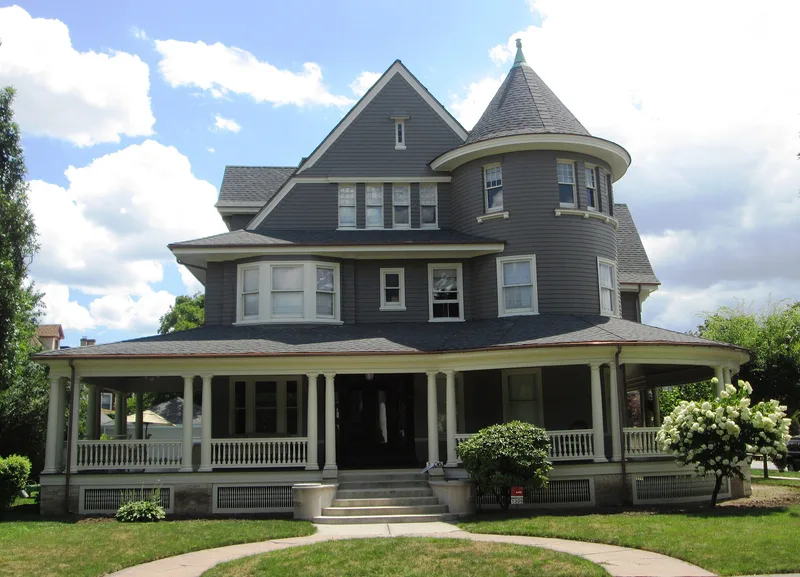
Prospect Park South is a planned residential district in the center of Brooklyn, covering all or part of fifteen blocks and the whole of the original real estate development. It holds 203 large single-family houses set in gardens, along landscaped streets, with central garden malls on Albemarle and Buckingham Roads. The houses were built in many styles, reflecting the eclecticism of the period. Colonial Revival dominates, but Queen Anne, neo-Tudor, Italian Villa, French Gothic, Swiss Chalet and Spanish Mission designs also appear. Architect John J. Petit designed many of them, including the grandest Colonial Revival mansion on Albemarle Road and the well-known Japanese style house at 131 Buckingham Road, created in 1902 with the help of Japanese artisans and used by developer Dean Alvord to advertise the development. The district's houses are larger and more distinguished than those nearby. Only nine intrusions, mostly apartment buildings and mid-century houses, break its character. Its boundaries match those of the city landmark district.
Machine-generated summary. This summary was generated by a language model from the official nomination document and has not been reviewed line by line by an editor. It may contain errors. Check the source document before relying on any detail. Source: nomination document (PDF) · catalog entry. Generated October 2026 (model claude-sonnet-5-5, prompt v1.0-2026-10-29).
| Styles | Predominantly Colonial Revival, with Queen Anne, neo-Tudor, neo-Elizabethan, Italian Villa, French Gothic, Swiss Chalet, Japanese and Spanish Mission examples |
|---|---|
| Areas of significance | Community Planning and Development, Landscape Architecture, Architecture |
| Acreage | 47 |
| Boundary source | NPS cultural-resource GIS polygon |
| Full listing page | Prospect Park South Historic District (property record) |
What listing means for this property
This is a historic district. Buildings within its boundary are either contributing (they add to the district's significance) or non-contributing. Owners of contributing income-producing buildings can claim the 20% federal rehabilitation tax credit; homeowners should look at state credits. National Register districts impose no design review by themselves; a local historic district ordinance, if one exists, does (the difference explained).
General information, not legal or tax advice. Rules change; confirm with your State Historic Preservation Office or a qualified adviser.