Prospect Heights Historic District

Why it's listed
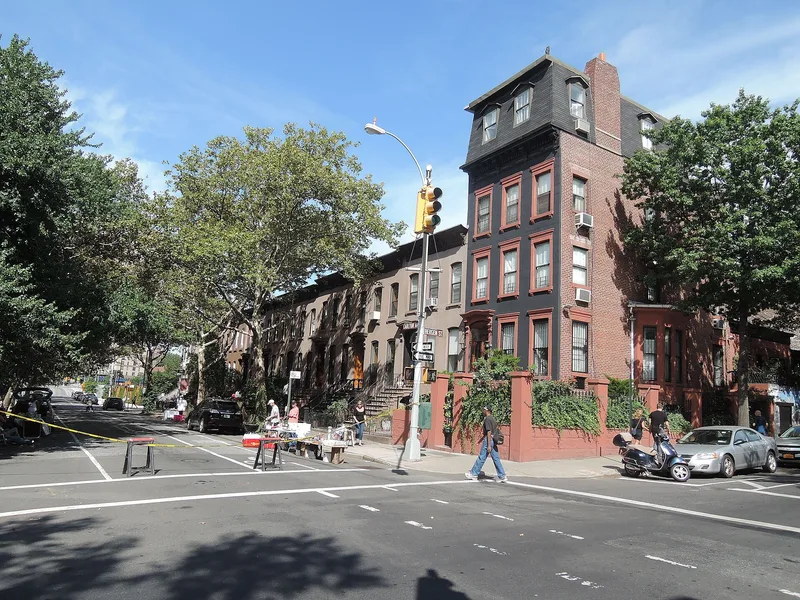
Prospect Heights is a Brooklyn neighborhood of more than 300 row houses and multiple dwellings, built mostly between the 1860s and the early 1890s, with a few turn-of-the-century additions. The district is often called one of the city's brownstone neighborhoods. Its houses were built for the growing middle-class population of what was then the independent city of Brooklyn. Speculative builders put up most of them, many without architects, and the majority are Italianate or Neo-Grec in style. Smaller groups reflect French Second Empire, Romanesque Revival and Neo-Renaissance design, including a row of narrow Romanesque Revival houses designed in 1893 by Magnus Dahlender and Neo-Renaissance houses by John Crown from 1899. Before development, the area was farmland along the Flatbush Turnpike, now Flatbush Avenue. Almost all buildings keep their original detailing, and only five intrusions are identified, mostly garages. Together the streets show what late nineteenth-century residential Brooklyn looked like.
Machine-generated summary. This summary was generated by a language model from the official nomination document and has not been reviewed line by line by an editor. It may contain errors. Check the source document before relying on any detail. Source: nomination document (PDF) · catalog entry. Generated October 2026 (model claude-sonnet-5-5, prompt v1.0-2026-10-29).
| Period of significance | c.1865-c.1915 |
|---|---|
| Styles | Italianate, French Second Empire, Neo-Grec, Romanesque Revival, Neo-Renaissance |
| Areas of significance | Architecture |
| Acreage | 15 |
| Boundary source | NPS cultural-resource GIS polygon |
| Full listing page | Prospect Heights Historic District (property record) |
What listing means for this property
This is a historic district. Buildings within its boundary are either contributing (they add to the district's significance) or non-contributing. Owners of contributing income-producing buildings can claim the 20% federal rehabilitation tax credit; homeowners should look at state credits. National Register districts impose no design review by themselves; a local historic district ordinance, if one exists, does (the difference explained).
General information, not legal or tax advice. Rules change; confirm with your State Historic Preservation Office or a qualified adviser.