Pomander Walk District

The National Park Service has not published a boundary polygon for this district; the map shows the listed properties inside it and the district's reference point.
Why it's listed
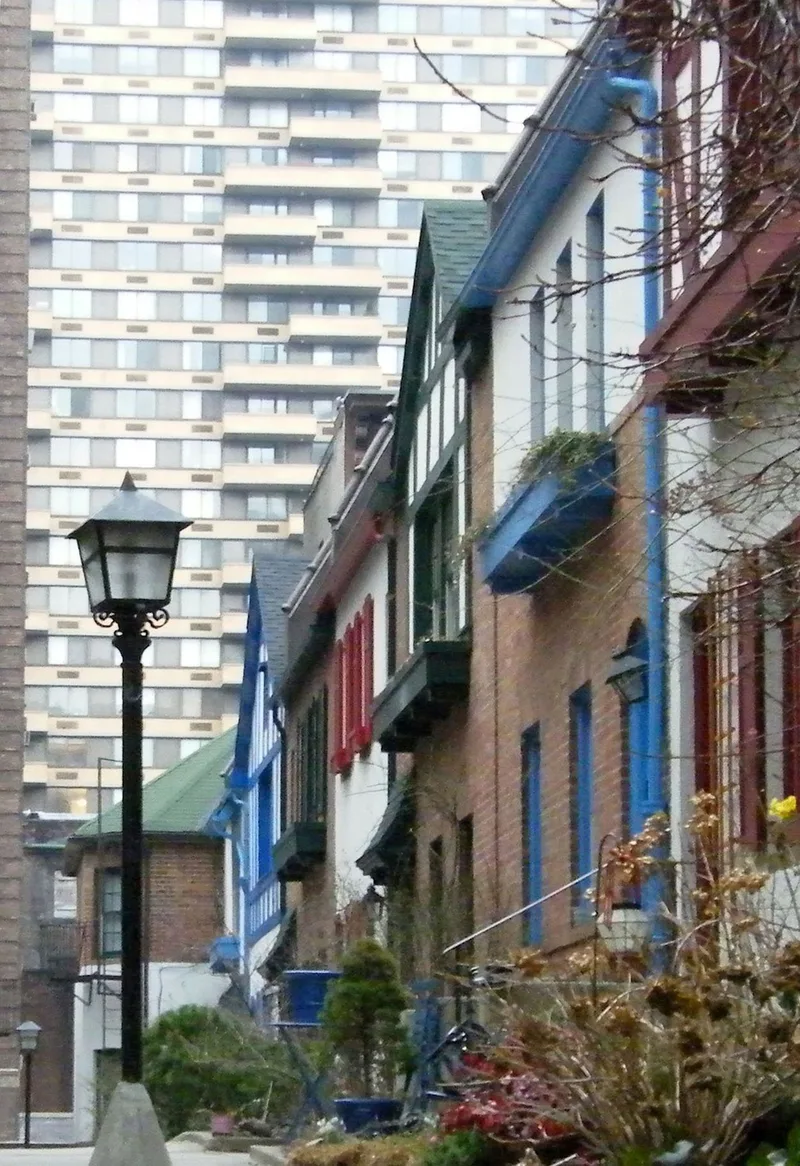
Pomander Walk is a small residential enclave in the middle of a Manhattan block between Broadway and West End Avenue, running from West 94th to West 95th Street. Sixteen two-story attached houses face a raised, gated pedestrian walk, and more three-story and two-story buildings face the side streets. Built in 1921 for theater enthusiast Thomas Healy and designed by King & Campbell, it was meant to recall the setting of the Broadway play Pomander Walk. The architects chose the model of a vernacular English village cottage rather than the play's Georgian townhouse set, using half-timbering, stucco, brick, painted shutters, window boxes and hedged flowerbeds. The district remains unaltered. It is considered significant as a planned, self-contained private residential community that still functions as one, unusual among Manhattan's private streets. Residents over the years have included actors, film stars and a theater critic, as well as early-music authority Lotta Van Buren.
Machine-generated summary. This summary was generated by a language model from the official nomination document and has not been reviewed line by line by an editor. It may contain errors. Check the source document before relying on any detail. Source: nomination document (PDF) · catalog entry. Generated October 2026 (model claude-sonnet-5-5, prompt v1.0-2026-10-29).
| Period of significance | 1900- (specific date 1921) |
|---|---|
| Styles | Tudoresque detailing evoking an English village street |
| Areas of significance | Community Planning and Development, Architecture |
| Acreage | 0.9 |
| Boundary source | not published |
| Full listing page | Pomander Walk District (property record) |
What listing means for this property
This is a historic district. Buildings within its boundary are either contributing (they add to the district's significance) or non-contributing. Owners of contributing income-producing buildings can claim the 20% federal rehabilitation tax credit; homeowners should look at state credits. National Register districts impose no design review by themselves; a local historic district ordinance, if one exists, does (the difference explained).
General information, not legal or tax advice. Rules change; confirm with your State Historic Preservation Office or a qualified adviser.