Point Chautauqua Historic District

Why it's listed
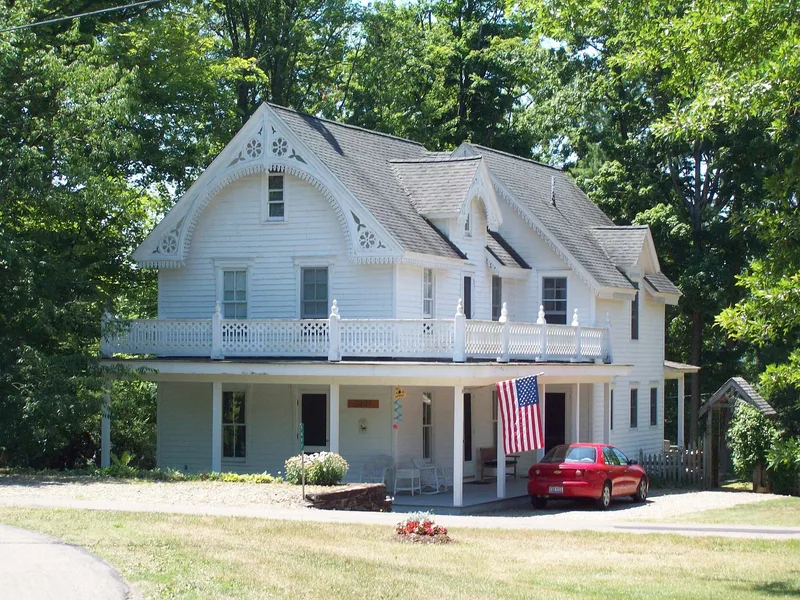
Point Chautauqua is an eighty-acre lakeside community on a peninsula of Lake Chautauqua, near Mayville in southwestern New York. It was laid out in 1875 for the American Baptist Church as a camp meeting, modeled on the Methodist camp directly across the lake. Frederick Law Olmsted, Sr. designed the plan, using curving, gently graded streets that follow the land, with public parks, a waterfront promenade and 465 small lots. Over time the religious purpose gave way to a summer resort. The Baptist operation went bankrupt in 1887, and the Grand Hotel and tabernacle were later lost. What remains is a street system of eleven intact streets and a collection of wood-frame cottages, mostly Carpenter Gothic from the early period, with Craftsman and Bungalow houses added later. The district includes 73 contributing resources and 37 noncontributing ones. It was listed for its Olmsted-designed plan and its record of resort development.
Machine-generated summary. This summary was generated by a language model from the official nomination document and has not been reviewed line by line by an editor. It may contain errors. Check the source document before relying on any detail. Source: nomination document (PDF) · catalog entry. Generated October 2026 (model claude-sonnet-5-5, prompt v1.0-2026-10-29).
| Styles | Mid-Nineteenth Century; Late Victorian; Late 19th and Early Twentieth Century; American Movements (Carpenter Gothic, Gothic Revival, Stick, Queen Anne, Craftsman) |
|---|---|
| Areas of significance | Architecture, Entertainment/Recreation, Community Planning and Development |
| Acreage | 80 |
| Boundary source | NPS cultural-resource GIS polygon |
| Full listing page | Point Chautauqua Historic District (property record) |
What listing means for this property
This is a historic district. Buildings within its boundary are either contributing (they add to the district's significance) or non-contributing. Owners of contributing income-producing buildings can claim the 20% federal rehabilitation tax credit; homeowners should look at state credits. National Register districts impose no design review by themselves; a local historic district ordinance, if one exists, does (the difference explained).
General information, not legal or tax advice. Rules change; confirm with your State Historic Preservation Office or a qualified adviser.