Peekskill Downtown Historic District

Why it's listed
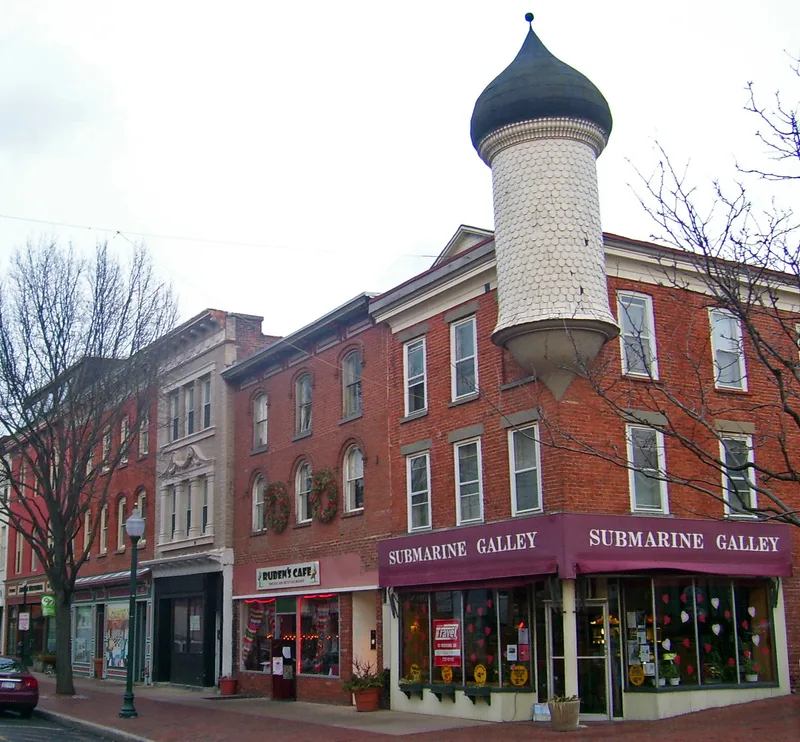
Peekskill's downtown historic district occupies the center of the city on the east bank of the Hudson River, where the Albany Post Road and the Danbury Road crossed Magregere's Brook. The area began as an agricultural milling and shipping center, then became a regional iron center producing stoves and farm implements. After the Civil War, industry moved toward the gorge and the river while brick commercial buildings, many in the Italianate style, filled the main streets. Churches such as the 1846 Greek Revival First Presbyterian Church, early houses, and a Moorish-towered corner building add variety. In the 1930s, Bank Street was cut across the last downtown foundry site, and Moderne buildings there spurred further redevelopment. Local architect Ralph Hopkins also designed the city hall. Urban Renewal removed many buildings in the 1960s and 1970s, yet the district still holds 157 contributing resources and keeps a compact nineteenth-century scale that is now uncommon in the Hudson Valley.
Machine-generated summary. This summary was generated by a language model from the official nomination document and has not been reviewed line by line by an editor. It may contain errors. Check the source document before relying on any detail. Source: nomination document (PDF) · catalog entry. Generated October 2026 (model claude-sonnet-5-5, prompt v1.0-2026-10-29).
| Period of significance | c. 1785-1953 |
|---|---|
| Styles | Greek Revival, Italianate, Second Empire, Moderne |
| Areas of significance | Architecture, Commerce, Community Planning and Development |
| Acreage | 40 |
| Boundary source | NPS cultural-resource GIS polygon |
| Full listing page | Peekskill Downtown Historic District (property record) |
What listing means for this property
This is a historic district. Buildings within its boundary are either contributing (they add to the district's significance) or non-contributing. Owners of contributing income-producing buildings can claim the 20% federal rehabilitation tax credit; homeowners should look at state credits. National Register districts impose no design review by themselves; a local historic district ordinance, if one exists, does (the difference explained).
General information, not legal or tax advice. Rules change; confirm with your State Historic Preservation Office or a qualified adviser.