Palmyra Village Historic District

Why it's listed
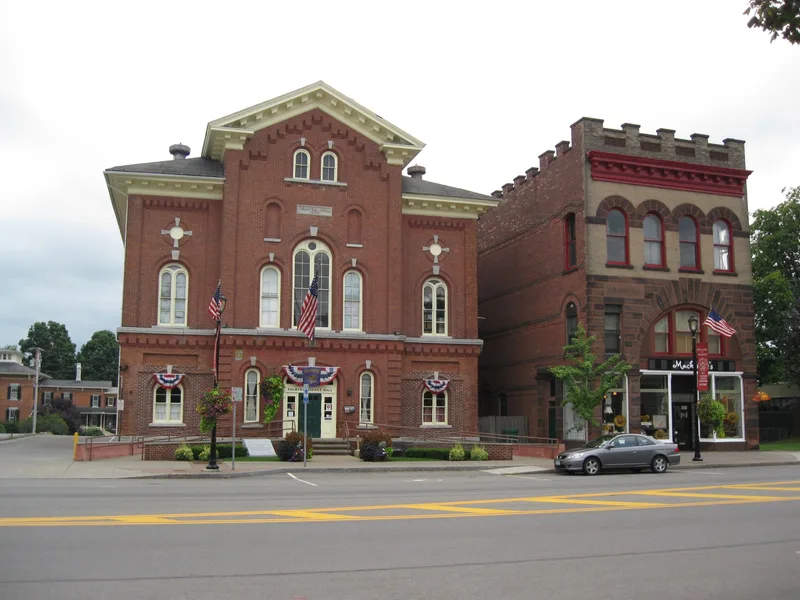
Palmyra's historic core in Wayne County, New York, is protected as a district of 217 contributing and 31 non-contributing resources. It brings together the earlier Market Street and East Main Street commercial districts, Zion Episcopal Church, and 164 additional properties. Masonry commercial, civic and religious buildings line East and West Main Streets, while frame houses extend outward along Jackson, Cuyler and Canandaigua Streets. Four large churches face each other at the central intersection, and the Village Hall, built in 1866-68 and designed by Horatio Nelson White, anchors the civic center. The Wayne County Fairgrounds mark the southwest edge. Most buildings date from about 1830 to 1890, reflecting the Erie Canal era, when Palmyra was a busy port and commercial center. The district also reflects early twentieth-century growth tied to the Garlock Manufacturing Company. Together the properties document the village's commerce, community development and architecture across more than two centuries.
Machine-generated summary. This summary was generated by a language model from the official nomination document and has not been reviewed line by line by an editor. It may contain errors. Check the source document before relying on any detail. Source: nomination document (PDF) · catalog entry. Generated October 2026 (model claude-sonnet-5-5, prompt v1.0-2026-10-29).
| Styles | Federal, Greek Revival, Gothic Revival, Italian Villa, Italianate, Second Empire, Stick/Eastlake, Queen Anne, Romanesque, Colonial Revival, Classical Revival, Tudor Revival, Bungalow |
|---|---|
| Areas of significance | Architecture, Commerce, Exploration/Settlement, Community Planning and Development |
| Acreage | 82 |
| Boundary source | NPS cultural-resource GIS polygon |
| Full listing page | Palmyra Village Historic District (property record) |
What listing means for this property
This is a historic district. Buildings within its boundary are either contributing (they add to the district's significance) or non-contributing. Owners of contributing income-producing buildings can claim the 20% federal rehabilitation tax credit; homeowners should look at state credits. National Register districts impose no design review by themselves; a local historic district ordinance, if one exists, does (the difference explained).
General information, not legal or tax advice. Rules change; confirm with your State Historic Preservation Office or a qualified adviser.