Pakatakan Artists Colony Historic District
Why it's listed
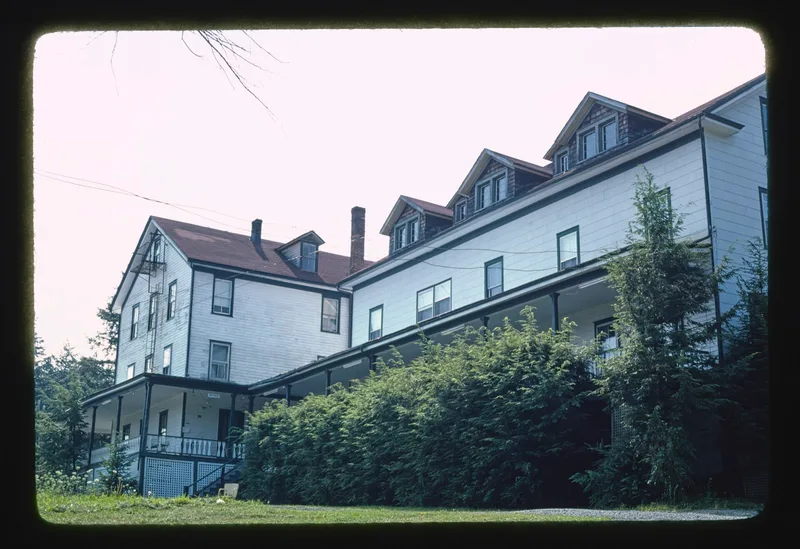
Set on the northern slope of Pakatakan Mountain at the edge of Arkville, this district is a small colony of artists' studios, summer residences and cottages gathered around the original Pakatakan Inn. Its roughly sixty-five acres hold thirty-five contributing features, built mostly between 1886 and 1930. The hotel opened in 1886, and landscape painter J. Francis Murphy built his studio the next year. Alexander Wyant, Charles Mann, Field and others followed, each building a shingled studio with a large north-facing window, a vaulted studio room, a corner fireplace and a sleeping loft. The buildings are simple, steeply roofed and spaced irregularly along rambling roads, with the grandest Shingle Style examples being the Wyant Studio and the Locke House. The painters favored delicate color and light over the grand scenes of the Hudson River School, and are described as a distinct Catskill Mountain group. Few alterations have occurred, though open meadows have grown back into woodland.
Machine-generated summary. This summary was generated by a language model from the official nomination document and has not been reviewed line by line by an editor. It may contain errors. Check the source document before relying on any detail. Source: nomination document (PDF) · catalog entry. Generated October 2026 (model claude-sonnet-5-5, prompt v1.0-2026-10-29).
| Styles | Late Victorian/Shingle Style |
|---|---|
| Areas of significance | Art, Architecture |
| Acreage | 65 |
| Boundary source | NPS cultural-resource GIS polygon |
| Full listing page | Pakatakan Artists Colony Historic District (property record) |
What listing means for this property
This is a historic district. Buildings within its boundary are either contributing (they add to the district's significance) or non-contributing. Owners of contributing income-producing buildings can claim the 20% federal rehabilitation tax credit; homeowners should look at state credits. National Register districts impose no design review by themselves; a local historic district ordinance, if one exists, does (the difference explained).
General information, not legal or tax advice. Rules change; confirm with your State Historic Preservation Office or a qualified adviser.