Old Homer Village Historic District

Why it's listed
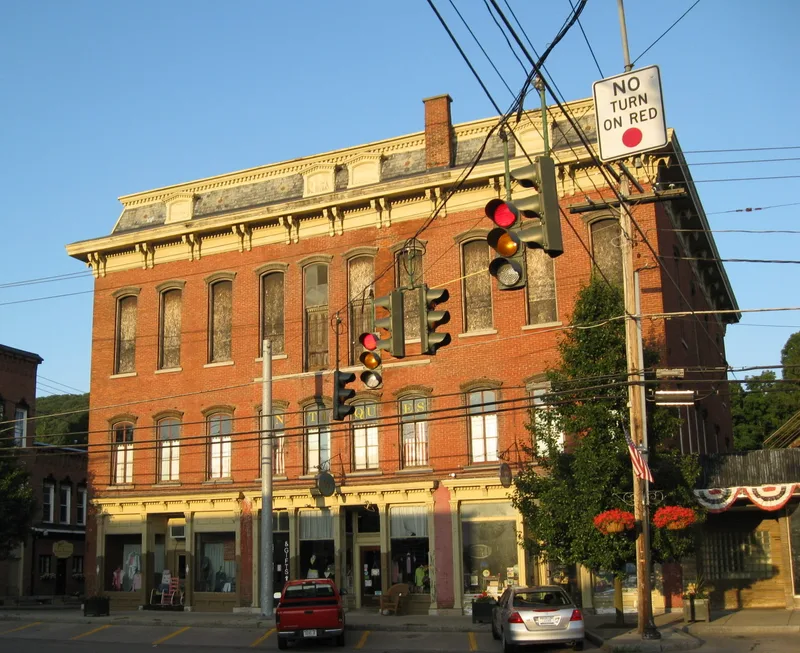
Homer Village is a 19th-century community about 3 miles north of Cortland, New York, whose historic district takes in Main Street, sections of Cayuga, James, Clinton and Albany Streets, and the village Green. Houses are mostly two-story frame buildings with clapboard and gable roofs, alongside larger brick homes, while the commercial blocks are brick buildings with bracketed cornices. Notable structures include the 1908 Town Hall, the 1863 Jedediah Barber building with its original elevator and upper-floor opera house, the 1887 Brockway Block, the 1816 tavern known as Wisdom's Gate, and an 1853 octagon house. The Green, ringed by churches, reflects the New England origins of Homer's first settlers. The district matters as the product of a century of economic development, driven by merchants such as Jedediah Barber, and it preserves the look of a 19th-century country village in central New York, with a century's range of architectural styles.
Machine-generated summary. This summary was generated by a language model from the official nomination document and has not been reviewed line by line by an editor. It may contain errors. Check the source document before relying on any detail. Source: nomination document (PDF) · catalog entry. Generated October 2026 (model claude-sonnet-5-5, prompt v1.0-2026-10-29).
| Period of significance | 19th Century |
|---|---|
| Styles | Varied 19th-century styles including Greek Revival, Italianate, Victorian and Romanesque elements |
| Areas of significance | Commerce, Education, Architecture |
| Acreage | 6.5 |
| Boundary source | NPS cultural-resource GIS polygon |
| Full listing page | Old Homer Village Historic District (property record) |
What listing means for this property
This is a historic district. Buildings within its boundary are either contributing (they add to the district's significance) or non-contributing. Owners of contributing income-producing buildings can claim the 20% federal rehabilitation tax credit; homeowners should look at state credits. National Register districts impose no design review by themselves; a local historic district ordinance, if one exists, does (the difference explained).
General information, not legal or tax advice. Rules change; confirm with your State Historic Preservation Office or a qualified adviser.