Old Chappaqua Historic District

Why it's listed
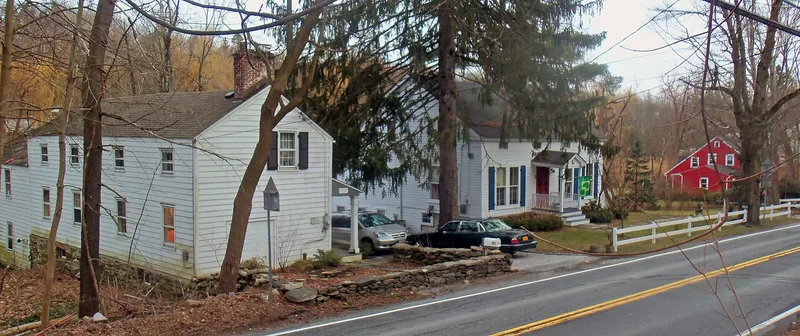
Old Chappaqua is a small cluster of late 18th and early 19th century farm buildings along Quaker Road in Chappaqua, New York. The district covers about 33 acres of wooded, hilly land and centers on a wood-frame Quaker Meeting House built in 1753, where Friends still meet weekly. Around it stand twelve simple, rectangular wood-frame structures, including farmhouses, a currying shop, tenant house and barns, typical of rural domestic building in Westchester County. Quakers began settling the area, then called Shapequaw, around 1730, and John Reynolds donated two acres for the meetinghouse and burial ground. The hamlet remained largely agricultural through the 1800s. When the Harlem Railroad arrived in 1846 east of the settlement, the depot drew growth elsewhere, leaving the old center intact despite later suburban development. The Meeting House is also noted as one of few similar Friends meeting houses in southern New York with remarkable architectural integrity inside and out.
Machine-generated summary. This summary was generated by a language model from the official nomination document and has not been reviewed line by line by an editor. It may contain errors. Check the source document before relying on any detail. Source: nomination document (PDF) · catalog entry. Generated October 2026 (model claude-sonnet-5-5, prompt v1.0-2026-10-29).
| Period of significance | 18th and 19th centuries |
|---|---|
| Styles | Vernacular architecture typical of agricultural settlements of the period |
| Areas of significance | Architecture, Religion |
| Acreage | 33 |
| Boundary source | NPS cultural-resource GIS polygon |
| Full listing page | Old Chappaqua Historic District (property record) |
What listing means for this property
This is a historic district. Buildings within its boundary are either contributing (they add to the district's significance) or non-contributing. Owners of contributing income-producing buildings can claim the 20% federal rehabilitation tax credit; homeowners should look at state credits. National Register districts impose no design review by themselves; a local historic district ordinance, if one exists, does (the difference explained).
General information, not legal or tax advice. Rules change; confirm with your State Historic Preservation Office or a qualified adviser.