North Main Street Historic District

Why it's listed
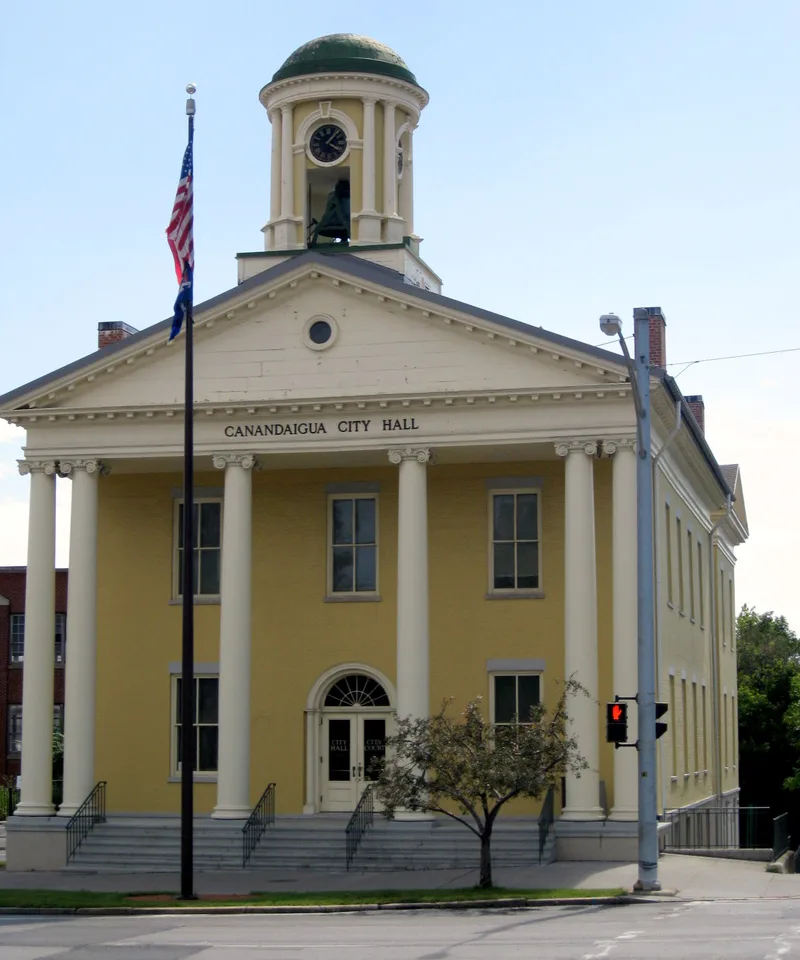
North Main Street in Canandaigua is a nearly mile-long corridor of houses, churches and civic buildings stretching from the railroad tracks to Buffalo-Chapel Street. Houses fill the northern three-quarters, while churches and government buildings cluster near the southern end. Notable buildings include the 1824 City Hall, built as the second Ontario County courthouse, the Greek Revival county courthouse with its dome, the First Congregational Church and Chapel, the Peter Porter House, and the Granger Homestead, now a house museum. The district shows Georgian, Federal, Greek Revival, Gothic and Victorian styles, with a consistent standard of quality and a conservative, restrained taste suited to a lawyers' county seat. The street's width and the deep setbacks of the buildings soften the effect of heavy traffic. Its history reaches back to the Phelps and Gorham land purchase of 1788, and several buildings were erected by their heirs. Public construction peaked in the early twentieth century with churches, a hospital, courthouse wings and a post office.
Machine-generated summary. This summary was generated by a language model from the official nomination document and has not been reviewed line by line by an editor. It may contain errors. Check the source document before relying on any detail. Source: nomination document (PDF) · catalog entry. Generated October 2026 (model claude-sonnet-5-5, prompt v1.0-2026-10-29).
| Period of significance | 19th and 20th centuries |
|---|---|
| Styles | Mixed 19th and early 20th century styles, including Georgian, Federal, Greek Revival, Gothic and Victorian |
| Areas of significance | Community Planning and Development, Architecture |
| Acreage | 85 |
| Boundary source | NPS cultural-resource GIS polygon |
| Full listing page | North Main Street Historic District (property record) |
What listing means for this property
This is a historic district. Buildings within its boundary are either contributing (they add to the district's significance) or non-contributing. Owners of contributing income-producing buildings can claim the 20% federal rehabilitation tax credit; homeowners should look at state credits. National Register districts impose no design review by themselves; a local historic district ordinance, if one exists, does (the difference explained).
General information, not legal or tax advice. Rules change; confirm with your State Historic Preservation Office or a qualified adviser.