North Grove Street Historic District

The National Park Service has not published a boundary polygon for this district; the map shows the listed properties inside it and the district's reference point.
Why it's listed
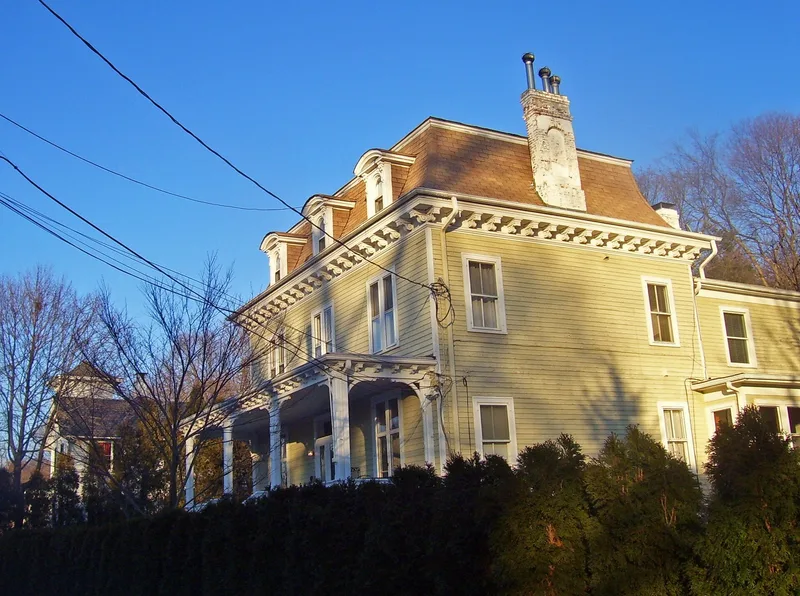
Above Tarrytown's commercial center, the northern end of Grove Street holds a compact cluster of five mid-nineteenth century houses and a carriage barn. Built between 1848 and 1868, they housed the town's leading citizens, who sought Hudson River views after the 1848 railroad pushed the population up the hill. Number One, a brick house with a mansard-roofed tower, was built in 1848 by merchant Jacob Odell, Tarrytown's first president, and now serves as the Historical Society's headquarters. Odell also built Number Fifteen in 1860 as a wedding present for his daughter. Number Nineteen dates from 1856, Number Eight from 1868 and was home to three generations of doctors, and Number Two was built in 1860 by newspaper editor Marcus Raymond. The group displays Italianate, Gothic and French Second Empire influences, with original brackets, towers, marble fireplaces and spiral staircases surviving. Mature trees, lawns and stone and iron fences complete a largely intact period streetscape.
Machine-generated summary. This summary was generated by a language model from the official nomination document and has not been reviewed line by line by an editor. It may contain errors. Check the source document before relying on any detail. Source: nomination document (PDF) · catalog entry. Generated October 2026 (model claude-sonnet-5-5, prompt v1.0-2026-10-29).
| Period of significance | 1800-1899 |
|---|---|
| Styles | Italianate, Gothic and French Second Empire influences (American Victorian) |
| Areas of significance | Architecture |
| Acreage | 1.5 |
| Boundary source | not published |
| Full listing page | North Grove Street Historic District (property record) |
What listing means for this property
This is a historic district. Buildings within its boundary are either contributing (they add to the district's significance) or non-contributing. Owners of contributing income-producing buildings can claim the 20% federal rehabilitation tax credit; homeowners should look at state credits. National Register districts impose no design review by themselves; a local historic district ordinance, if one exists, does (the difference explained).
General information, not legal or tax advice. Rules change; confirm with your State Historic Preservation Office or a qualified adviser.