North Broad Street Historic District

Why it's listed
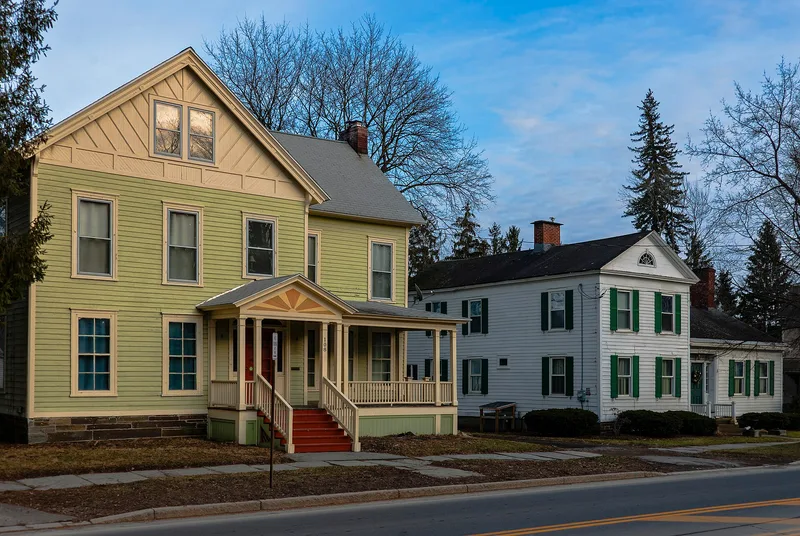
North Broad Street Historic District covers three blocks of Route 12 in Norwich, New York, lined with tall trees and wide lawns that screen forty-one detached houses. Most are two or three stories and built of wood, with a few of stone or brick. The earliest, in the Greek Revival style, stand on Cortland and Rexford Streets and the lower end of North Broad Street; 110 North Broad Street was designed by Archibald Clark. Farther north are Victorian houses in the Second Empire, Stick, Queen Anne, Eastlake and Italianate modes, including an elaborate Italian villa with a bracketed cupola at 116. The street began as farmland along a major turnpike. After the Chenango Canal opened in the 1840s, the county grew rapidly and new housing appeared here, with thirty-four houses standing by 1853. Over time it became the address of Norwich's wealthier residents, and some late nineteenth-century homes included grand ballrooms. Despite minor alterations and some conversions to other uses, the district remains well maintained and largely intact.
Machine-generated summary. This summary was generated by a language model from the official nomination document and has not been reviewed line by line by an editor. It may contain errors. Check the source document before relying on any detail. Source: nomination document (PDF) · catalog entry. Generated October 2026 (model claude-sonnet-5-5, prompt v1.0-2026-10-29).
| Styles | Greek Revival, Second Empire, Stick, Queen Anne, Eastlake and Italianate (Italian villa) styles |
|---|---|
| Areas of significance | Architecture |
| Acreage | 19.5 |
| Boundary source | NPS cultural-resource GIS polygon |
| Full listing page | North Broad Street Historic District (property record) |
What listing means for this property
This is a historic district. Buildings within its boundary are either contributing (they add to the district's significance) or non-contributing. Owners of contributing income-producing buildings can claim the 20% federal rehabilitation tax credit; homeowners should look at state credits. National Register districts impose no design review by themselves; a local historic district ordinance, if one exists, does (the difference explained).
General information, not legal or tax advice. Rules change; confirm with your State Historic Preservation Office or a qualified adviser.