New Berlin Historic District

Why it's listed
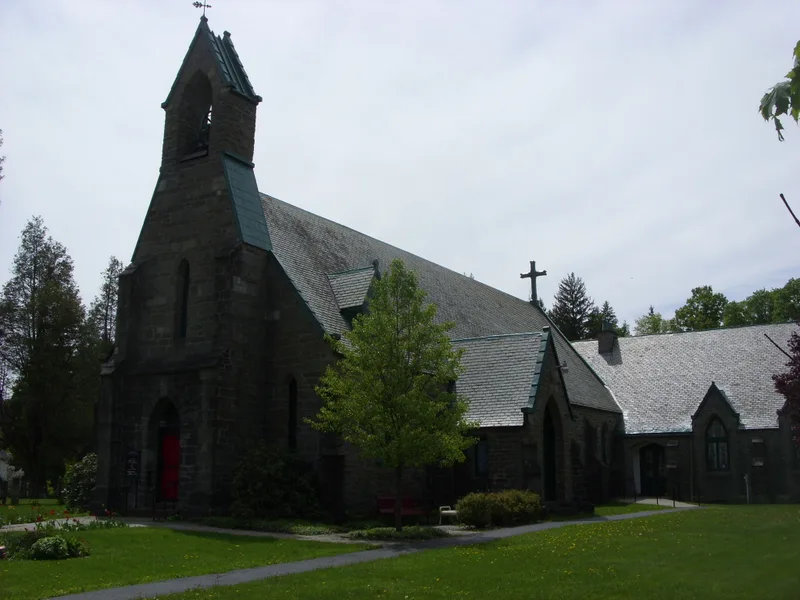
New Berlin's historic district covers 122 properties in a cross-shaped area centered on the village's Four Corners, west of the Unadilla River in Chenango County, New York. The commercial core, with flat-fronted frame and brick stores, gives way to tree-lined residential streets where houses sit behind deep lawns. Federal, Greek Revival, Italianate and Queen Anne houses mix along each street, with a few Gothic Revival and Bungalow examples. Churches include St. Andrew's, a fieldstone parish church designed by Richard Upjohn and built in 1847-48, and the stone Horace O. Moss House of 1831 is another landmark. A small cluster on Railroad Avenue holds a depot, hotel and feed store complex. The 1936 Art Deco central high school is counted as contributing for its design and hilltop setting. The boundary was drawn to leave out areas damaged by intrusive development and alterations, and only a few non-contributing buildings remain inside it.
Machine-generated summary. This summary was generated by a language model from the official nomination document and has not been reviewed line by line by an editor. It may contain errors. Check the source document before relying on any detail. Source: nomination document (PDF) · catalog entry. Generated October 2026 (model claude-sonnet-5-5, prompt v1.0-2026-10-29).
| Styles | Federal, Greek Revival, Italianate, Queen Anne, Gothic Revival, Colonial Revival, Bungalow, Art Deco |
|---|---|
| Areas of significance | Exploration/Settlement, Architecture |
| Acreage | 69 |
| Boundary source | NPS cultural-resource GIS polygon |
| Full listing page | New Berlin Historic District (property record) |
What listing means for this property
This is a historic district. Buildings within its boundary are either contributing (they add to the district's significance) or non-contributing. Owners of contributing income-producing buildings can claim the 20% federal rehabilitation tax credit; homeowners should look at state credits. National Register districts impose no design review by themselves; a local historic district ordinance, if one exists, does (the difference explained).
General information, not legal or tax advice. Rules change; confirm with your State Historic Preservation Office or a qualified adviser.