New Baltimore Hamlet Historic District

Why it's listed
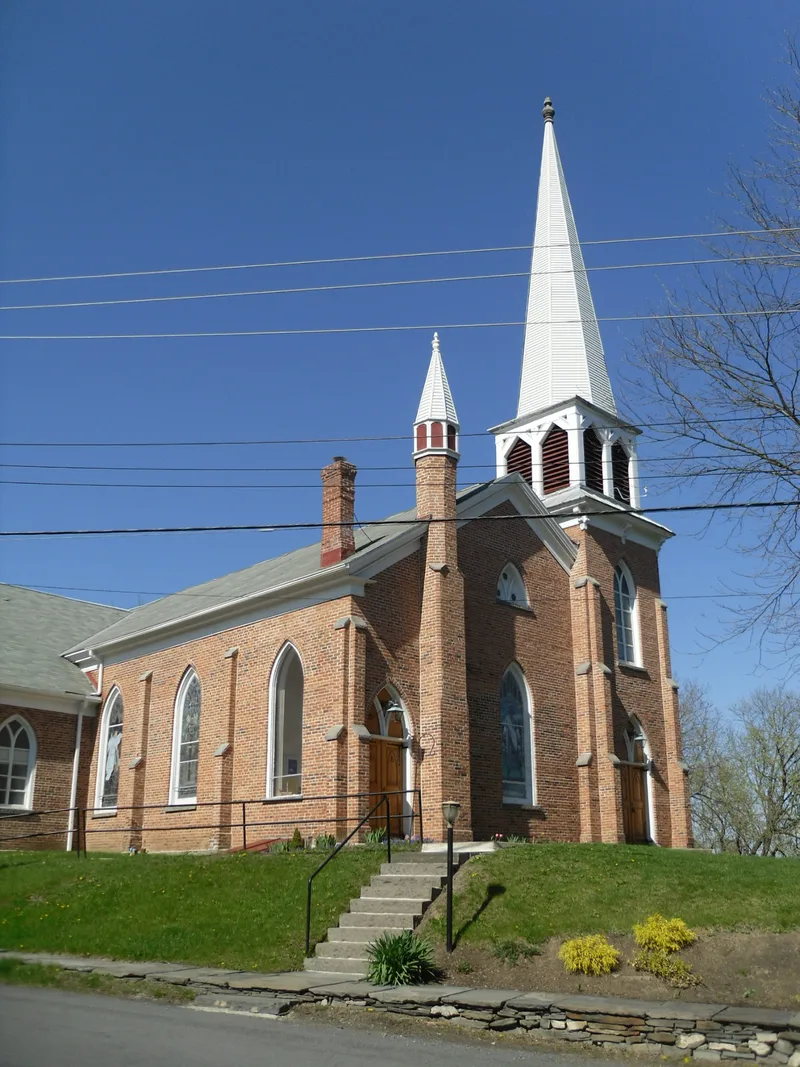
New Baltimore Hamlet occupies a series of steep terraces on the west bank of the Hudson River in Greene County, about 15 miles south of Albany. The historic district covers roughly 103 acres and includes 95 contributing buildings and a cemetery, mostly houses built from the late eighteenth to the late nineteenth century. The oldest documented dwelling is a stone farmhouse built around 1770 by Steven Parson. The hamlet began as a landing and grew into a shipbuilding and repair community, with milling, freighting and ice businesses. Fires destroyed most of its commercial center, known as The Square, and none of the industrial structures survive, though remains of the Sherman ship yard, including a sawmill, marine railroad and pier supports, are known. What remains is a varied collection of vernacular Federal, Greek Revival, Italianate, Second Empire and Queen Anne buildings. Notable public buildings include the Dutch Reformed Church, the former Methodist Church of 1874, Cornell Hall of 1906 and the 1909 public school.
Machine-generated summary. This summary was generated by a language model from the official nomination document and has not been reviewed line by line by an editor. It may contain errors. Check the source document before relying on any detail. Source: nomination document (PDF) · catalog entry. Generated October 2026 (model claude-sonnet-5-5, prompt v1.0-2026-10-29).
| Styles | Early Republic/Federal; Mid-19th Century/Greek Revival, Gothic Revival; Late Victorian/Italianate, Second Empire, Queen Anne; Early 20th Century/Bungalow, Craftsman |
|---|---|
| Areas of significance | Architecture |
| Acreage | 113 |
| Boundary source | NPS cultural-resource GIS polygon |
| Full listing page | New Baltimore Hamlet Historic District (property record) |
What listing means for this property
This is a historic district. Buildings within its boundary are either contributing (they add to the district's significance) or non-contributing. Owners of contributing income-producing buildings can claim the 20% federal rehabilitation tax credit; homeowners should look at state credits. National Register districts impose no design review by themselves; a local historic district ordinance, if one exists, does (the difference explained).
General information, not legal or tax advice. Rules change; confirm with your State Historic Preservation Office or a qualified adviser.