Nelson Avenue-Fort Hill Historic District

Why it's listed
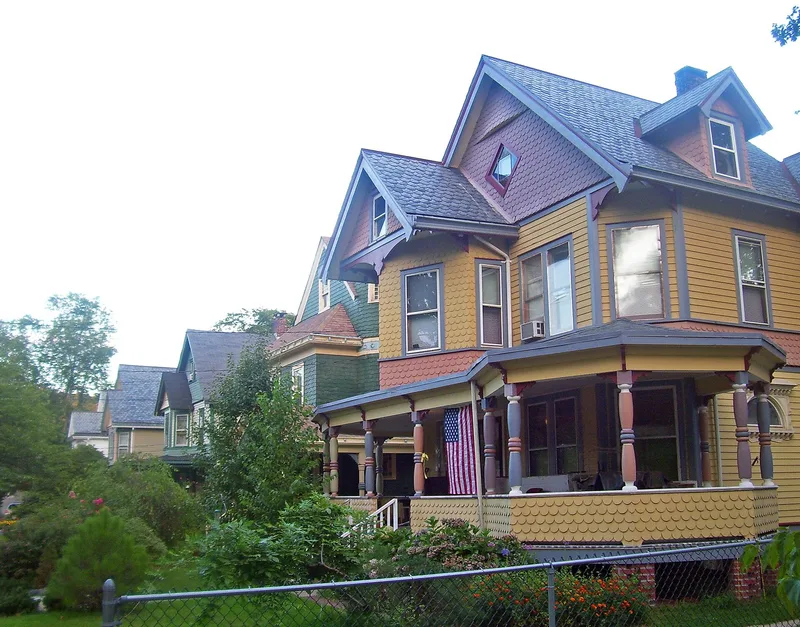
Nelson Avenue and the surrounding streets of Fort Hill form a residential neighborhood just north of Peekskill's commercial core on the Hudson River. Maps from 1800 and 1837 show no roads here, and by 1852 fewer than ten houses stood in the area. Growth followed Peekskill's Civil War-era boom, and estates were subdivided in the 1880s and 1890s as Nelson and Decatur avenues were extended north. The district now holds 199 contributing resources, mainly single and multiple dwellings. They include Greek Revival houses from the 1840s and c. 1850, Gothic Revival and Hudson River Bracketed homes, Second Empire houses such as the Charles Lamos house at 935 Orchard Street, and Queen Anne houses from around 1888 and 1895. Carriage houses and barns survive behind several of them. The neighborhood was home to foundry owners, builders, merchants and officials, and its large, well-spaced houses reflect the city's prosperity and changing economic makeup.
Machine-generated summary. This summary was generated by a language model from the official nomination document and has not been reviewed line by line by an editor. It may contain errors. Check the source document before relying on any detail. Source: nomination document (PDF) · catalog entry. Generated October 2026 (model claude-sonnet-5-5, prompt v1.0-2026-10-29).
| Styles | Mid-19th century, late 19th century and early 20th century styles, including Greek Revival, Gothic Revival, Italianate, Second Empire, Queen Anne and Hudson River Bracketed |
|---|---|
| Areas of significance | Architecture, Community Planning and Development |
| Acreage | 30 |
| Boundary source | NPS cultural-resource GIS polygon |
| Full listing page | Nelson Avenue-Fort Hill Historic District (property record) |
What listing means for this property
This is a historic district. Buildings within its boundary are either contributing (they add to the district's significance) or non-contributing. Owners of contributing income-producing buildings can claim the 20% federal rehabilitation tax credit; homeowners should look at state credits. National Register districts impose no design review by themselves; a local historic district ordinance, if one exists, does (the difference explained).
General information, not legal or tax advice. Rules change; confirm with your State Historic Preservation Office or a qualified adviser.