Mt. Albion Cemetery

Why it's listed
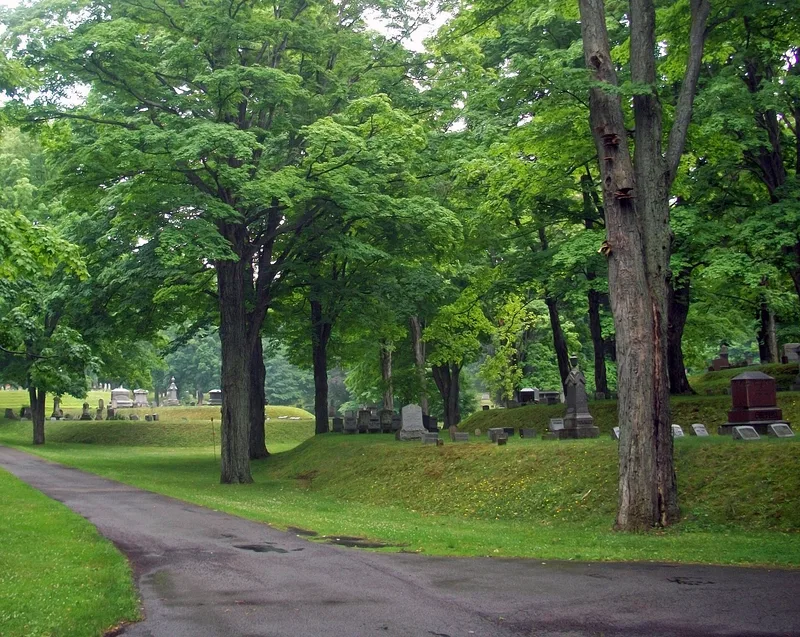
Mt. Albion Cemetery occupies a small drumlin rising from flat farmland on the eastern edge of Albion, New York, linked to the village by a mile-and-a-half sidewalk of slate and Medina sandstone. The oldest section dates from 1842, and the grounds grew westward through the later nineteenth century. Narrow, winding roads climb terraced slopes under mature trees, while open grassy dells served as park and botanical garden, with flowering shrubs, rare yuccas and a notable butternut tree. Local Medina sandstone unifies the structures: a Gothic chapel of 1875, an entrance arch of 1881, cemetery offices and barn of 1889, a 58-foot Soldiers and Sailors Monument of 1874, and a domed spring house of 1908. Marvin Porter, a former Erie Canal engineer, is credited with the original layout. The cemetery was listed as an intact example of the American rural cemetery and of picturesque landscape design, with its sandstone architecture reflecting the local quarrying boom.
Machine-generated summary. This summary was generated by a language model from the official nomination document and has not been reviewed line by line by an editor. It may contain errors. Check the source document before relying on any detail. Source: nomination document (PDF) · catalog entry. Generated October 2026 (model claude-sonnet-5-5, prompt v1.0-2026-10-29).
| Period of significance | 1800-1899 |
|---|---|
| Styles | Gothic Revival, Richardsonian Romanesque |
| Areas of significance | Landscape Architecture |
| Acreage | 70 |
| Boundary source | NPS cultural-resource GIS polygon |
| Full listing page | Mt. Albion Cemetery (property record) |
What listing means for this property
This is a historic district. Buildings within its boundary are either contributing (they add to the district's significance) or non-contributing. Owners of contributing income-producing buildings can claim the 20% federal rehabilitation tax credit; homeowners should look at state credits. National Register districts impose no design review by themselves; a local historic district ordinance, if one exists, does (the difference explained).
General information, not legal or tax advice. Rules change; confirm with your State Historic Preservation Office or a qualified adviser.