Mount Lebanon Shaker Society

Why it's listed
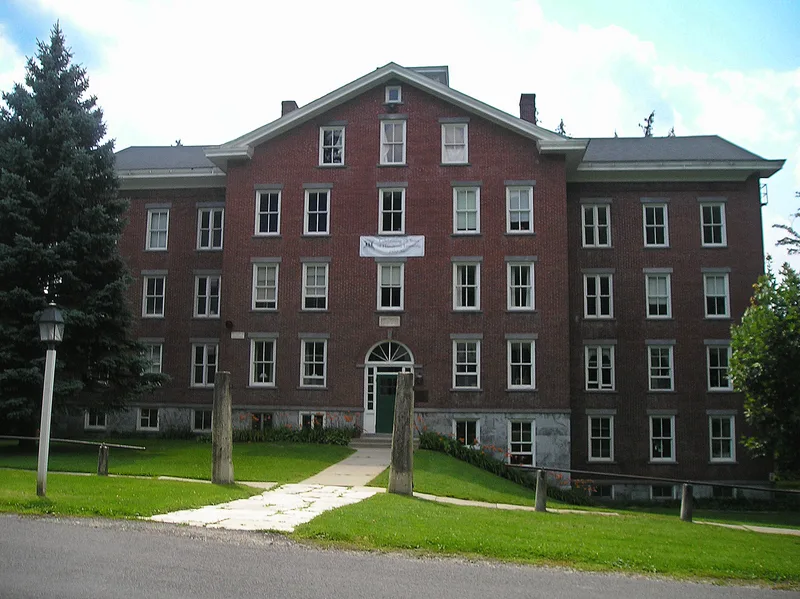
Mount Lebanon Shaker village sits on the west side of Mount Lebanon at New Lebanon, New York. Begun in 1785, it grew into five Shaker families, North, Church, Center, Second and South, each with its own dwellings, workshops and barns. Buildings date from 1785 to about 1876, ranging from frame to brick and stone, and follow a plain, functional Shaker style. After a major fire in 1875, brick buildings replaced several frame ones. The village served for roughly 150 years as the principal Shaker community and was home to the central ministry. At its peak it held 600 members and 100 buildings on 6,000 acres. It also holds the first Shaker meetinghouse in America, built in 1785. After the last Mount Lebanon Shaker died in 1947, the village was sold. The Darrow School now uses many of the buildings, including the 1824 second meetinghouse, now its library, while the South Family is occupied by a religious community.
Machine-generated summary. This summary was generated by a language model from the official nomination document and has not been reviewed line by line by an editor. It may contain errors. Check the source document before relying on any detail. Source: nomination document (PDF) · catalog entry. Generated October 2026 (model claude-sonnet-5-5, prompt v1.0-2026-10-29).
| Period of significance | 1786-1947 |
|---|---|
| Styles | Shaker style, marked by functionalism and simple form, with Victorian influence in the 1875-76 Main Dwelling House and Ministry House |
| Areas of significance | Religion, Social History |
| Acreage | 270 |
| Boundary source | NPS cultural-resource GIS polygon |
| Full listing page | Mount Lebanon Shaker Society (property record) |
What listing means for this property
This is a historic district. Buildings within its boundary are either contributing (they add to the district's significance) or non-contributing. Owners of contributing income-producing buildings can claim the 20% federal rehabilitation tax credit; homeowners should look at state credits. National Register districts impose no design review by themselves; a local historic district ordinance, if one exists, does (the difference explained).
General information, not legal or tax advice. Rules change; confirm with your State Historic Preservation Office or a qualified adviser.