Mount Gulian

Why it's listed
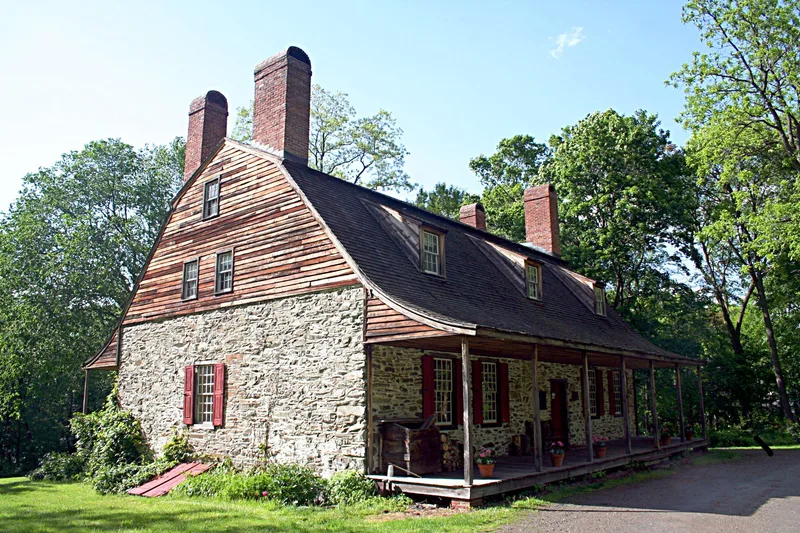
Mount Gulian is a 12.71-acre site north of Beacon, New York, on the Hudson River, where the Verplanck family lived for roughly two centuries. Gulian Verplanck II most likely built the one-and-a-half-story stone house around 1740. A large Federal-style addition followed in 1804, and a fire in 1931 gutted the building. Between 1967 and 1975 the older portion was rebuilt on its original foundation and surviving walls, guided by an eighteenth-century engraving and family photographs. The grounds also hold a Dutch barn built by Philip Verplanck I, moved from Fishkill Plains and reassembled in the 1970s. It is among the earliest Dutch barns surviving in the country and has unusual projecting gables. Baron von Steuben used the house as headquarters during the last winter of the Revolution, and it is linked to the founding of the Society of the Cincinnati. Archaeological testing in 1978 found eighteenth-century deposits, a domestic midden and a probable prehistoric hearth.
Machine-generated summary. This summary was generated by a language model from the official nomination document and has not been reviewed line by line by an editor. It may contain errors. Check the source document before relying on any detail. Source: nomination document (PDF) · catalog entry. Generated October 2026 (model claude-sonnet-5-5, prompt v1.0-2026-10-29).
| Styles | Federal-style 1804 addition (now gone); Dutch barn |
|---|---|
| Areas of significance | Historic - Non-Aboriginal, Architecture |
| Acreage | 12.7 |
| Boundary source | NPS cultural-resource GIS polygon |
| Full listing page | Mount Gulian (property record) |
What listing means for this property
This is a historic district. Buildings within its boundary are either contributing (they add to the district's significance) or non-contributing. Owners of contributing income-producing buildings can claim the 20% federal rehabilitation tax credit; homeowners should look at state credits. National Register districts impose no design review by themselves; a local historic district ordinance, if one exists, does (the difference explained).
General information, not legal or tax advice. Rules change; confirm with your State Historic Preservation Office or a qualified adviser.