Mott Haven Historic District

Why it's listed
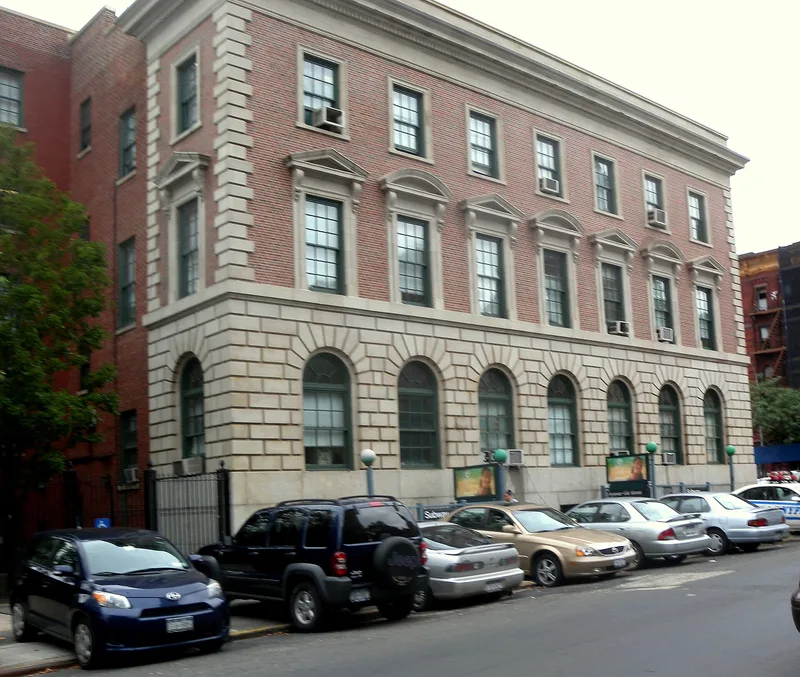
Mott Haven Historic District covers roughly ten blocks of the South Bronx, centered on Alexander Avenue. Row houses of three to five stories make up most of the district, with shops and services along East 138th Street and Third Avenue. High-rise housing projects now tower around the older blocks. Construction dates run from the early 1860s to the 1920s, though most buildings went up in the last quarter of the nineteenth century. Styles include Renaissance Revival, neo-Grec, Queen Anne, Romanesque Revival and Victorian Gothic, yet scale, materials and craftsmanship give the area a consistent look. Architects generally designed whole blocks of row houses as units, producing uniform cornice lines and ironwork. Notable buildings include St. Jerome's Roman Catholic Church of 1898, the Tercera Iglesia Bautista of 1900-1902, the Mott Haven branch library of 1905, the 40th Precinct police station of 1922-24, two Romanesque Revival warehouses of 1912-13, and a former theatre building of 1896 on Third Avenue.
Machine-generated summary. This summary was generated by a language model from the official nomination document and has not been reviewed line by line by an editor. It may contain errors. Check the source document before relying on any detail. Source: nomination document (PDF) · catalog entry. Generated October 2026 (model claude-sonnet-5-5, prompt v1.0-2026-10-29).
| Styles | Mixed late 19th and early 20th century styles including Renaissance Revival, Greek Revival, neo-Grec, Queen Anne, Romanesque Revival and Victorian Gothic |
|---|---|
| Areas of significance | Architecture |
| Acreage | 11 |
| Boundary source | NPS cultural-resource GIS polygon |
| Full listing page | Mott Haven Historic District (property record) |
What listing means for this property
This is a historic district. Buildings within its boundary are either contributing (they add to the district's significance) or non-contributing. Owners of contributing income-producing buildings can claim the 20% federal rehabilitation tax credit; homeowners should look at state credits. National Register districts impose no design review by themselves; a local historic district ordinance, if one exists, does (the difference explained).
General information, not legal or tax advice. Rules change; confirm with your State Historic Preservation Office or a qualified adviser.