Morris High School Historic District

Why it's listed
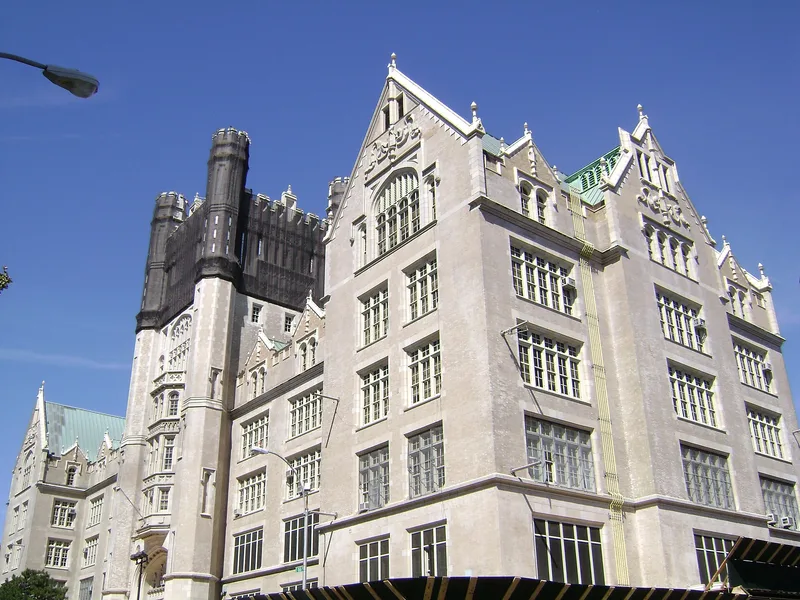
Morris High School Historic District is a compact part of the south Bronx made up of a major public school, a Victorian Gothic church and two streets of brick rowhouses. Most of the two- and three-story houses were built between 1900 and 1904 from designs by Warren C. Dickerson, John H. Lavelle and Harry T. Howell. They share buff brick, limestone trim and galvanized metal cornices, with bays, stepped gables and elaborate ironwork adding variety. Morris High School, completed in 1904 to designs by C.B.J. Snyder, is a Collegiate Gothic building with a central tower. It was one of five such high schools built across the city's boroughs after the school system was consolidated in 1898. Trinity Episcopal Church of Morrisania, begun in 1874, is the oldest building and later gained a rectory and parish hall. Surrounding blocks have been heavily altered, so this group stands out for its unity of scale, style and survival.
Machine-generated summary. This summary was generated by a language model from the official nomination document and has not been reviewed line by line by an editor. It may contain errors. Check the source document before relying on any detail. Source: nomination document (PDF) · catalog entry. Generated October 2026 (model claude-sonnet-5-5, prompt v1.0-2026-10-29).
| Period of significance | 1874-1904 |
|---|---|
| Styles | Free Classical rowhouses; Collegiate Gothic school; Victorian Gothic church |
| Areas of significance | Architecture |
| Acreage | 8 |
| Boundary source | NPS cultural-resource GIS polygon |
| Full listing page | Morris High School Historic District (property record) |
What listing means for this property
This is a historic district. Buildings within its boundary are either contributing (they add to the district's significance) or non-contributing. Owners of contributing income-producing buildings can claim the 20% federal rehabilitation tax credit; homeowners should look at state credits. National Register districts impose no design review by themselves; a local historic district ordinance, if one exists, does (the difference explained).
General information, not legal or tax advice. Rules change; confirm with your State Historic Preservation Office or a qualified adviser.