Midway Park

The National Park Service has not published a boundary polygon for this district; the map shows the listed properties inside it and the district's reference point.
Why it's listed
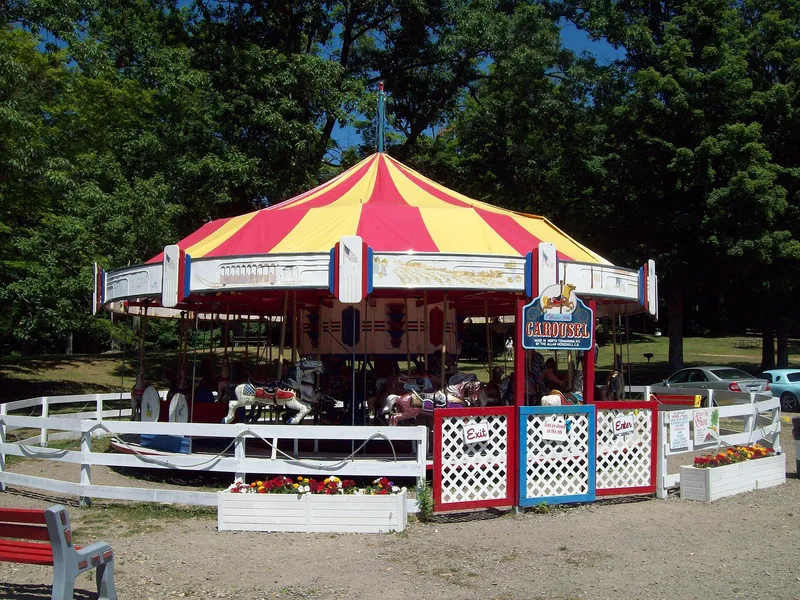
Midway Park is a forty-four-acre amusement and picnic ground on the east shore of Chautauqua Lake, along NY 430 in Maple Springs. It began in 1898, when the Jamestown and Lake Erie Railway leased seventeen acres for a picnic grounds served by steamboat and rail. The name came from a dock built halfway between two older landings. In 1915 the steamship company bought the park, added twenty-seven acres and built a two-story lakeside pavilion, 200 by 100 feet, with a restaurant and bathhouse below and a skating rink and dance hall above. Rides followed, including a 1924 Jack Rabbit roller coaster and a 1928 carousel; the carousel house and a 1930 arcade survive. Picnic pavilions from the 1920s, an eighteen-hole miniature golf course and a kiddieland assembled between 1951 and 1960 reflect later growth. The park is recognized for its role in regional recreation between 1898 and 1960. It became a state park in 2006.
Machine-generated summary. This summary was generated by a language model from the official nomination document and has not been reviewed line by line by an editor. It may contain errors. Check the source document before relying on any detail. Source: nomination document (PDF) · catalog entry. Generated October 2026 (model claude-sonnet-5-5, prompt v1.0-2026-10-29).
| Period of significance | 1898-1960 |
|---|---|
| Areas of significance | Architecture, Entertainment/Recreation |
| Acreage | 44 |
| Boundary source | not published |
| Full listing page | Midway Park (property record) |
What listing means for this property
This is a historic district. Buildings within its boundary are either contributing (they add to the district's significance) or non-contributing. Owners of contributing income-producing buildings can claim the 20% federal rehabilitation tax credit; homeowners should look at state credits. National Register districts impose no design review by themselves; a local historic district ordinance, if one exists, does (the difference explained).
General information, not legal or tax advice. Rules change; confirm with your State Historic Preservation Office or a qualified adviser.