Mechanicville Hydroelectric Plant

Why it's listed
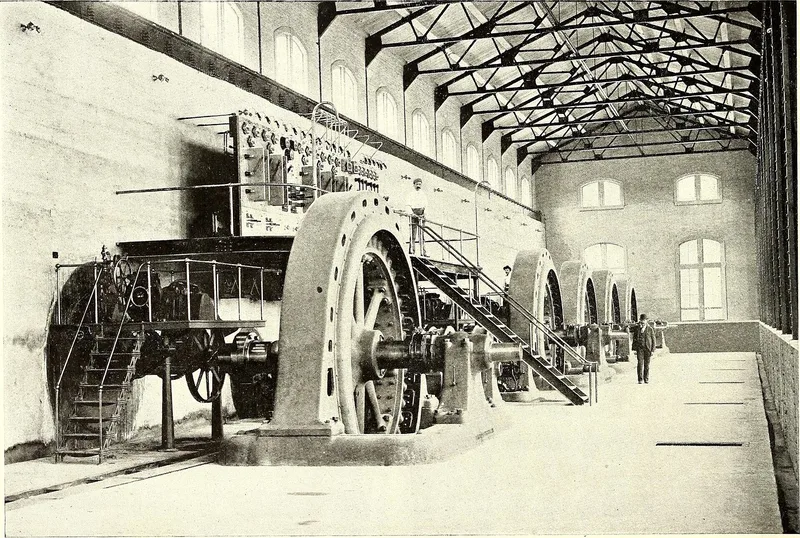
Mechanicville Hydroelectric Plant sits on the Hudson River south of Mechanicville, New York. Built in 1897-98 by the Hudson River Power Transmission Company, it combines a brick, gable-roofed powerhouse with an earth embankment, a concrete non-overflow dam and a long concrete overflow dam running to the eastern bank. Inside, seven General Electric generators, original to the 1897-99 installation, are driven by turbines that were replaced in 1902 with larger units by S. Morgan Smith. The plant was designed to send alternating current to customers including the General Electric works at Schenectady, at a time when long-distance transmission was a new technology. It has operated continuously since construction and is described as the oldest extant hydroelectric plant in the state. The nomination values it for industrial development, engineering and architecture, noting that the building and equipment remain remarkably close to their original appearance. Later additions include a 1901 boiler house and 1950s frequency converters.
Machine-generated summary. This summary was generated by a language model from the official nomination document and has not been reviewed line by line by an editor. It may contain errors. Check the source document before relying on any detail. Source: nomination document (PDF) · catalog entry. Generated October 2026 (model claude-sonnet-5-5, prompt v1.0-2026-10-29).
| Period of significance | 1897, 1902 |
|---|---|
| Styles | Industrial, Queen Anne |
| Areas of significance | Industry, Engineering, Architecture |
| Acreage | 18.3 |
| Boundary source | NPS cultural-resource GIS polygon |
| Full listing page | Mechanicville Hydroelectric Plant (property record) |
What listing means for this property
This is a historic district. Buildings within its boundary are either contributing (they add to the district's significance) or non-contributing. Owners of contributing income-producing buildings can claim the 20% federal rehabilitation tax credit; homeowners should look at state credits. National Register districts impose no design review by themselves; a local historic district ordinance, if one exists, does (the difference explained).
General information, not legal or tax advice. Rules change; confirm with your State Historic Preservation Office or a qualified adviser.