Mariaville Historic District

The National Park Service has not published a boundary polygon for this district; the map shows the listed properties inside it and the district's reference point.
Why it's listed
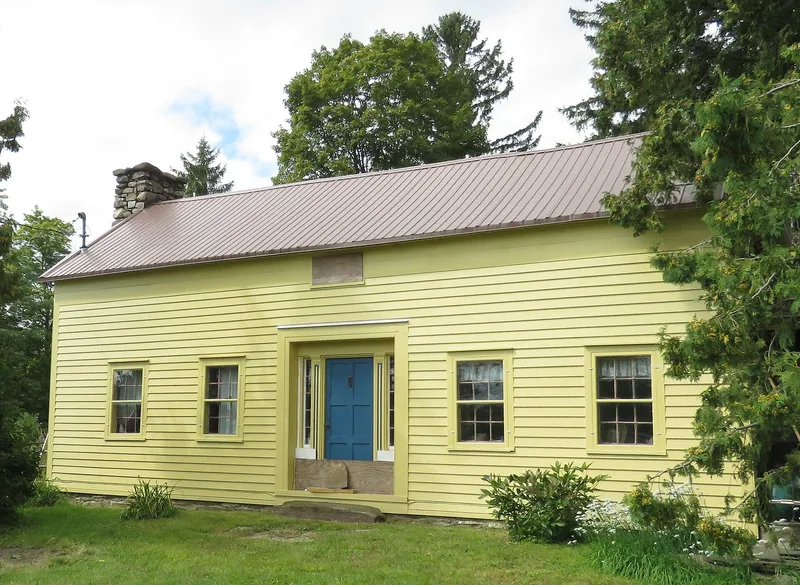
Mariaville Historic District is a compact cluster of eight properties on the northwest shore of Mariaville Lake in Duanesburg, Schenectady County. Seven are contributing: five houses, a church and a general store, along with several outbuildings. Nearly all are wood-framed, clapboard-sided Greek Revival buildings from about 1830 to 1850, with gable roofs, wide friezes, corner pilasters and trabeated entrances. The hamlet grew from a grist mill built after James Duane dammed Chuctanunda Creek in 1793, forming the lake. In 1830 Silas Marsh added a saw mill and grist mill, then built his house and general store. Other notable buildings include the First Presbyterian Church of 1842, its parsonage, the Hiram Hansett House and the Frost Homestead. The district was listed because it holds the town's densest group of vernacular Greek Revival architecture and recalls an early industrial and commercial center. The water-powered industries faded in the early twentieth century, and the area is now a summer resort community.
Machine-generated summary. This summary was generated by a language model from the official nomination document and has not been reviewed line by line by an editor. It may contain errors. Check the source document before relying on any detail. Source: nomination document (PDF) · catalog entry. Generated October 2026 (model claude-sonnet-5-5, prompt v1.0-2026-10-29).
| Period of significance | 1830-1850 |
|---|---|
| Styles | Greek Revival (vernacular), with late Federal features |
| Areas of significance | Architecture |
| Acreage | 9 |
| Boundary source | not published |
| Full listing page | Mariaville Historic District (property record) |
What listing means for this property
This is a historic district. Buildings within its boundary are either contributing (they add to the district's significance) or non-contributing. Owners of contributing income-producing buildings can claim the 20% federal rehabilitation tax credit; homeowners should look at state credits. National Register districts impose no design review by themselves; a local historic district ordinance, if one exists, does (the difference explained).
General information, not legal or tax advice. Rules change; confirm with your State Historic Preservation Office or a qualified adviser.