Mansion Historic District

Why it's listed
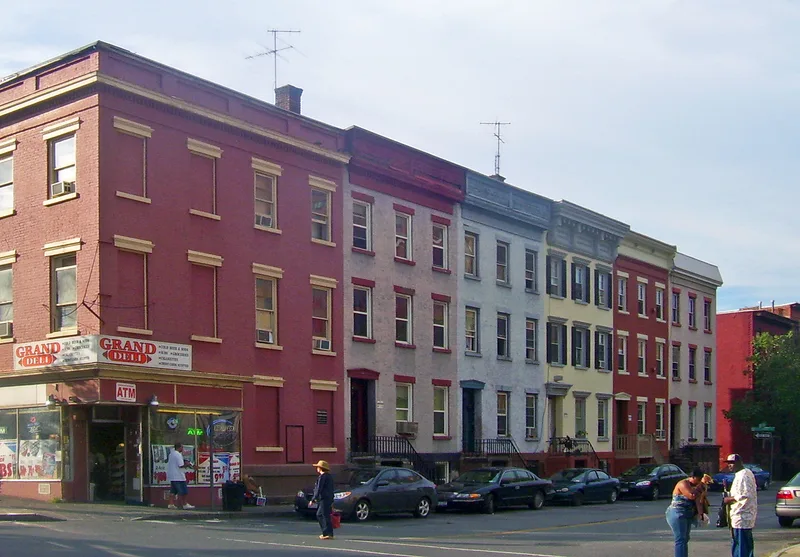
Mansion Historic District occupies sixteen blocks on a hill in southeastern Albany, set between two ravines that were filled and graded in the mid-nineteenth century. About 475 buildings and outbuildings remain, mainly houses, with shops along South Pearl Street and Madison Avenue, two churches, schools and three small parks on Philip Street. South Pearl and Grand Streets date to the 18th century, Madison Avenue to the early 19th century, and Trinity Place to 1836. Development came in stages: scattered building from 1820 to 1835, planned rows from the late 1830s, a surge in the 1850s that turned open land into a compact neighborhood, and infill in the 1860s and 1870s. Italianate brick and frame rows dominate, and several Gothic-style buildings on one street are described as unique in Albany. Construction of the Empire State Plaza, demolition in nearby areas and public housing has left the district physically isolated.
Machine-generated summary. This summary was generated by a language model from the official nomination document and has not been reviewed line by line by an editor. It may contain errors. Check the source document before relying on any detail. Source: nomination document (PDF) · catalog entry. Generated October 2026 (model claude-sonnet-5-5, prompt v1.0-2026-10-29).
| Styles | Predominantly Italianate row houses, with some Gothic buildings |
|---|---|
| Areas of significance | Community Planning and Development, Architecture, Social History |
| Acreage | 45 |
| Boundary source | NPS cultural-resource GIS polygon |
| Full listing page | Mansion Historic District (property record) |
What listing means for this property
This is a historic district. Buildings within its boundary are either contributing (they add to the district's significance) or non-contributing. Owners of contributing income-producing buildings can claim the 20% federal rehabilitation tax credit; homeowners should look at state credits. National Register districts impose no design review by themselves; a local historic district ordinance, if one exists, does (the difference explained).
General information, not legal or tax advice. Rules change; confirm with your State Historic Preservation Office or a qualified adviser.