Manitoga

Why it's listed
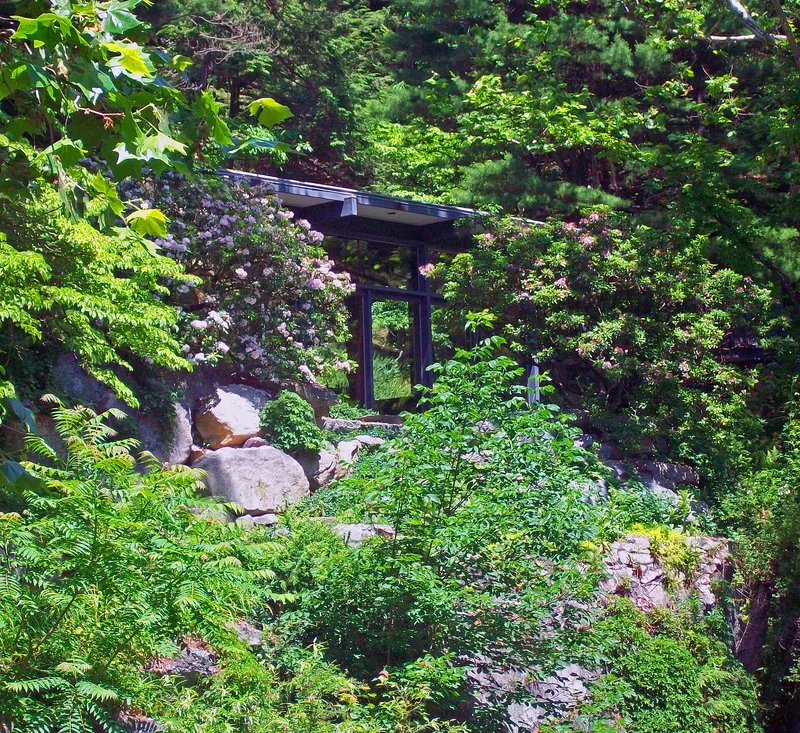
Manitoga is the home, studio and forest garden of industrial designer Russel Wright, set on seventy-five acres in Garrison, New York, in the Hudson Highlands. Wright bought the land and developed it between 1942 and about 1960, reshaping an abandoned quarry into a pond with a waterfall and laying out woodland paths and garden rooms. His house and studio, known as Dragon Rock, were finished in 1960 and are built into the quarry cliff, stepping down through eleven levels. Granite outcrops form part of the foundation and living spaces, and the south side opens to the pond through large glass walls. Interiors used plaster and plastic embedded with local plants, and furnishings changed with the seasons. The property matters as a personal design experiment showing how a modern American family might live in close relation to nature. It includes a house, a studio, the designed landscape and a non-historic guide house built in 1974. The studio was restored in 2003-04, and the site now operates as a museum and garden.
Machine-generated summary. This summary was generated by a language model from the official nomination document and has not been reviewed line by line by an editor. It may contain errors. Check the source document before relying on any detail. Source: nomination document (PDF) · catalog entry. Generated October 2026 (model claude-sonnet-5-5, prompt v1.0-2026-10-29).
| Styles | Modern Movement |
|---|---|
| Areas of significance | Architecture, Landscape Architecture, Industry |
| Acreage | 79 |
| Boundary source | NPS cultural-resource GIS polygon |
| Full listing page | Manitoga (property record) |
What listing means for this property
This is a historic district. Buildings within its boundary are either contributing (they add to the district's significance) or non-contributing. Owners of contributing income-producing buildings can claim the 20% federal rehabilitation tax credit; homeowners should look at state credits. National Register districts impose no design review by themselves; a local historic district ordinance, if one exists, does (the difference explained).
General information, not legal or tax advice. Rules change; confirm with your State Historic Preservation Office or a qualified adviser.