Manhattan Avenue-West 120th-123rd Streets Historic District

Why it's listed
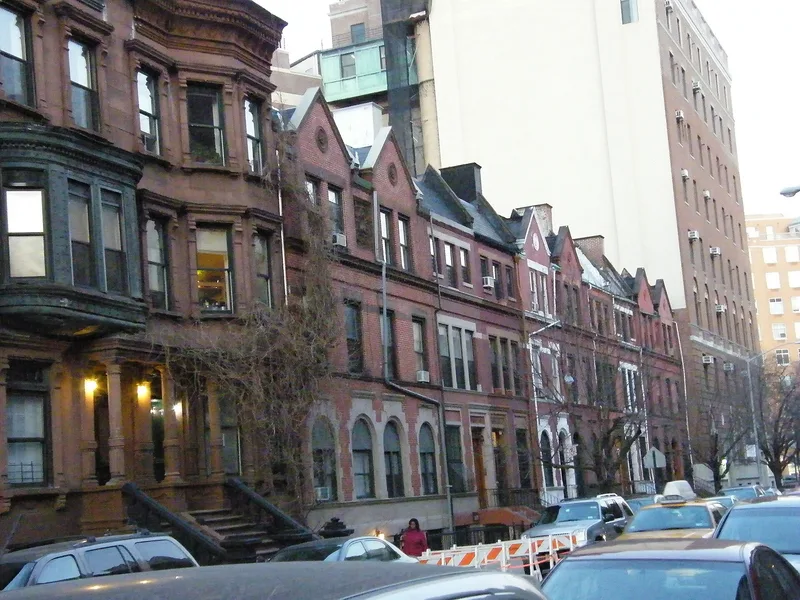
Along four short blocks at the western edge of Central Harlem, 113 brownstone and brick row houses form an unbroken residential enclave beside Morningside Park. Each house rises three stories above a raised basement, and all were built between 1886 and 1896 by speculative builders during Harlem's building boom. The rows show a progression of fashionable styles: Neo-Grec houses with rectilinear incised detail on West 123rd Street and Manhattan Avenue, the more numerous Queen Anne houses with Romanesque ornament, brick, terra cotta and varied rooflines, and Renaissance Revival houses on West 120th Street with limestone upper floors, garlands and wreaths. Most designers were developers listed as both architect and builder, using catalogue-ordered mill-made detail. The streetscapes keep uniform height, setbacks, stoops and ornament, and they contrast with surrounding tenements and apartment buildings. The houses first held single families of English, German and Irish descent, and after World War I the area changed with Harlem's growing Black community. The district's integrity is its main claim to importance.
Machine-generated summary. This summary was generated by a language model from the official nomination document and has not been reviewed line by line by an editor. It may contain errors. Check the source document before relying on any detail. Source: nomination document (PDF) · catalog entry. Generated October 2026 (model claude-sonnet-5-5, prompt v1.0-2026-10-29).
| Styles | Neo-Grec, Queen Anne, Renaissance |
|---|---|
| Areas of significance | Architecture |
| Boundary source | NPS cultural-resource GIS polygon |
| Full listing page | Manhattan Avenue-West 120th-123rd Streets Historic District (property record) |
What listing means for this property
This is a historic district. Buildings within its boundary are either contributing (they add to the district's significance) or non-contributing. Owners of contributing income-producing buildings can claim the 20% federal rehabilitation tax credit; homeowners should look at state credits. National Register districts impose no design review by themselves; a local historic district ordinance, if one exists, does (the difference explained).
General information, not legal or tax advice. Rules change; confirm with your State Historic Preservation Office or a qualified adviser.