Main Street Historic District Boundary Increase
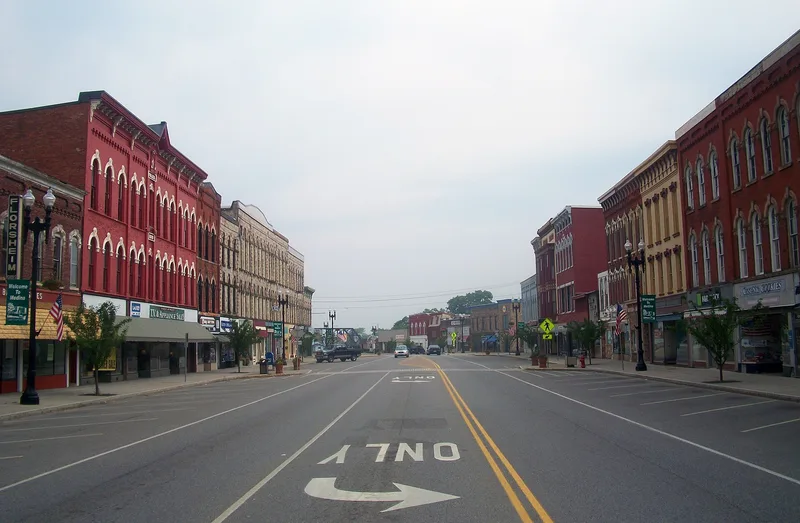

Why it's listed
This addition to Medina's Main Street Historic District brings in a wooden railroad freight station and a stretch of track on West Avenue. The station was built around 1905 by the New York Central and Hudson River Railroad Company. It measures 300 feet long and 40 feet wide and is purported to be the largest surviving wooden freight station in the country. The one-story, hipped-roof building has clapboard siding, broad bracketed eaves and an interior with intact timber trusses and two Burbank scales. It replaced an earlier freight house that had become too small for the growing village, whose shipping needs rose sharply after the H. J. Heinz Company opened a plant in 1899 to produce cider vinegar and ketchup. The station handled freight until 1965, then served as a furniture warehouse before becoming a railroad museum. The original district excluded the parcel, but it was later recognized that the station and the train depot across the street are connected by the surviving tracks.
Machine-generated summary. This summary was generated by a language model from the official nomination document and has not been reviewed line by line by an editor. It may contain errors. Check the source document before relying on any detail. Source: nomination document (PDF) · catalog entry. Generated October 2026 (model claude-sonnet-5-5, prompt v1.0-2026-10-29).
| Period of significance | ca. 1905 |
|---|---|
| Areas of significance | Architecture, Commerce, Transportation |
| Acreage | 1.5 |
| Boundary source | NPS cultural-resource GIS polygon |
| Full listing page | Main Street Historic District Boundary Increase (property record) |
What listing means for this property
This is a historic district. Buildings within its boundary are either contributing (they add to the district's significance) or non-contributing. Owners of contributing income-producing buildings can claim the 20% federal rehabilitation tax credit; homeowners should look at state credits. National Register districts impose no design review by themselves; a local historic district ordinance, if one exists, does (the difference explained).
General information, not legal or tax advice. Rules change; confirm with your State Historic Preservation Office or a qualified adviser.