Main Street Historic District

Why it's listed
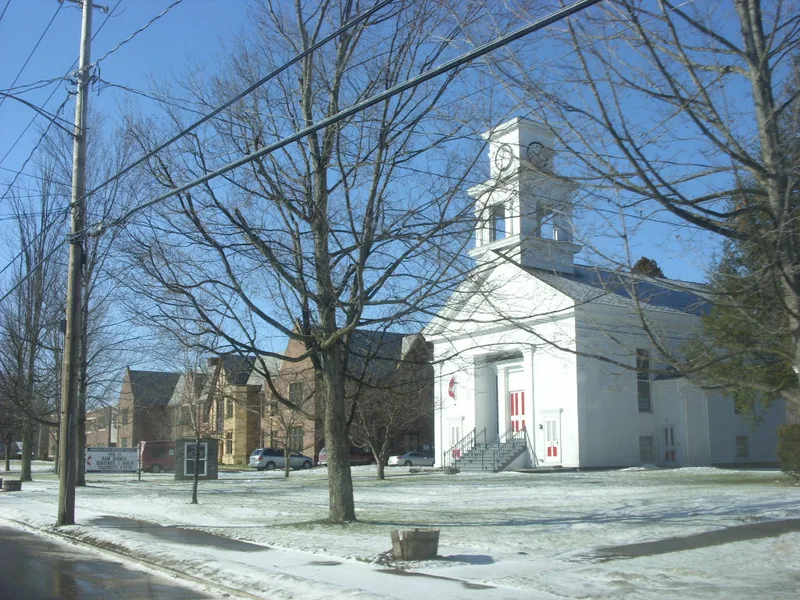
Along the northern end of Main Street in Roxbury, a hamlet in the upper Catskills, a group of 49 properties forms a well-preserved nineteenth and early twentieth century streetscape. The district holds 86 contributing buildings, mostly frame houses on large lots with deep setbacks, set along a wide street with a uniform tree line, granite curbstones and bluestone sidewalks. Greek Revival and Italianate houses predominate, many later given Classical Revival porches and cornices. The ends of the district are anchored by a rural cemetery, the 1826 Frisbee house, an 1858 Greek Revival Methodist church, the English Gothic Gould Memorial Church with Tiffany windows, and a 1939 Tudor Revival school. Growth followed the 1872 arrival of the Ulster and Delaware Railroad, which moved commerce to the crossroads south of the district and left Main Street largely residential. Residents have kept the historic landscape, including the curbstones when the state highway was resurfaced.
Machine-generated summary. This summary was generated by a language model from the official nomination document and has not been reviewed line by line by an editor. It may contain errors. Check the source document before relying on any detail. Source: nomination document (PDF) · catalog entry. Generated October 2026 (model claude-sonnet-5-5, prompt v1.0-2026-10-29).
| Styles | Greek Revival, Italianate, Queen Anne, Stick, Gothic, Tudor Revival and Classical Revival |
|---|---|
| Areas of significance | Architecture |
| Acreage | 50 |
| Boundary source | NPS cultural-resource GIS polygon |
| Full listing page | Main Street Historic District (property record) |
What listing means for this property
This is a historic district. Buildings within its boundary are either contributing (they add to the district's significance) or non-contributing. Owners of contributing income-producing buildings can claim the 20% federal rehabilitation tax credit; homeowners should look at state credits. National Register districts impose no design review by themselves; a local historic district ordinance, if one exists, does (the difference explained).
General information, not legal or tax advice. Rules change; confirm with your State Historic Preservation Office or a qualified adviser.