Main Street Historic District

The National Park Service has not published a boundary polygon for this district; the map shows the listed properties inside it and the district's reference point.
Why it's listed
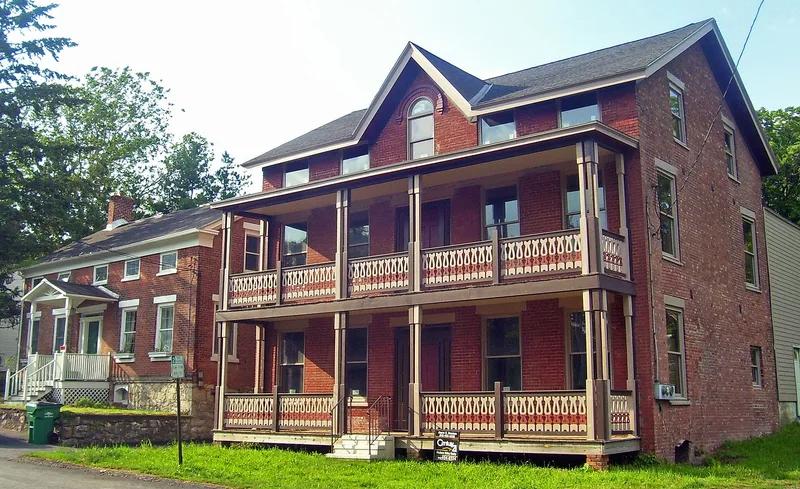
Six buildings along Main Street in New Hamburg, Dutchess County, form a compact remnant of a village streetscape from the railroad age. Three houses of about 1850 show typical local forms: a side-passage house, a center-passage house enlarged to five bays, and a two-story center-passage house later given a cross gable and bracketed trim. Commercial buildings include the brick Central House Hotel of about 1855, a small 1875 post office with a later railway express wing, and a store of about 1876. The railroad arrived in 1848, and commercial development spread westward from the tracks, shifting the hamlet's focus from the river docks. In 1928 the railroad widened its right-of-way, removed the street's crossing and created Bridge Street, leaving this block isolated. Listing recognizes the group as the best surviving example in the hamlet of how architecture and daily life changed as rail transport displaced the river economy in the later nineteenth century.
Machine-generated summary. This summary was generated by a language model from the official nomination document and has not been reviewed line by line by an editor. It may contain errors. Check the source document before relying on any detail. Source: nomination document (PDF) · catalog entry. Generated October 2026 (model claude-sonnet-5-5, prompt v1.0-2026-10-29).
| Styles | Local vernacular with Greek Revival and Gothic Revival/picturesque influences |
|---|---|
| Areas of significance | Commerce, Architecture |
| Acreage | 1 |
| Boundary source | not published |
| Full listing page | Main Street Historic District (property record) |
What listing means for this property
This is a historic district. Buildings within its boundary are either contributing (they add to the district's significance) or non-contributing. Owners of contributing income-producing buildings can claim the 20% federal rehabilitation tax credit; homeowners should look at state credits. National Register districts impose no design review by themselves; a local historic district ordinance, if one exists, does (the difference explained).
General information, not legal or tax advice. Rules change; confirm with your State Historic Preservation Office or a qualified adviser.